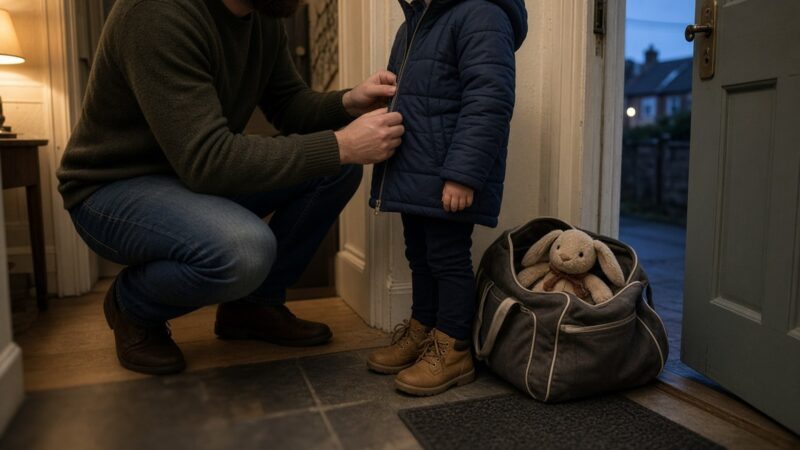

Now then. There’s a particular sound a house makes in late October. Someone coughing upstairs, the kettle going, and a school bag being dumped in the hall with a crumpled letter in the bottom of it that should have been signed a fortnight ago. With three kids in three different stages in our place, I’ve learned to empty bags on a Monday. I won’t say how many forms I’ve fished out of the bottom of one.
This year that crumpled letter might matter a bit more than usual. Flu looks like it’s got going early, and half term, with all the travelling, sleepovers and visits to the grandparents that come with it, is nearly here.
What’s actually happening
On 20 October Netmums ran a piece with GP Dr Asimah Hanif, who works with the travel insurer Staysure, on what parents should know about flu before the break. It’s worth a read. But the bit that caught my eye was the headline, so I went and checked where it came from.
It comes from the UK Health Security Agency. In a blog post on 8 October, UKHSA said flu activity in England throughout September was higher than at the same point in any of the last four winters. Levels are still at what they call baseline, which means low overall. But if the upward trend carries on, it points to an early season. So far most of the rise has been in 18 to 24 year olds, which makes sense if you think about freshers’ week and shared kitchens.
The latest weekly surveillance report, published on 15 October, said flu had levelled off for that week and was still at baseline, with some signs of a dip among young adults. A&E visits for flu like illness were still above what you’d normally expect for the time of year, though. So not a crisis. Just not the quiet October we usually get.
There’s another wrinkle. UKHSA says one of the strains going round, H1N1, has drifted a little from the version used to make this year’s vaccine. That happens most years and it’s too early to say what difference it’ll make. Last winter a drifted strain turned up too, and UKHSA’s own analysis found vaccinated children were still around 65 to 70% less likely to end up at hospital with flu. That’s the number I’d hold onto.
The vaccine bit, in plain English
For the 2026 to 2027 season in England, the NHS children’s flu vaccine is offered to:
- children aged 2 or 3 on 31 August 2026, through the GP surgery, NHS online booking or a pharmacy that offers it
- children aged 4 who haven’t started school yet
- every school year from Reception to Year 11, usually at school
- children from 6 months to 17 with certain long term conditions, such as asthma that needs a steroid inhaler
For most kids it’s a quick squirt up each nostril. No needle. If your family avoids pork products, the nasal spray contains porcine gelatine, and GOV.UK guidance says parents can ask for an injected vaccine instead. Children who’ve had a recent asthma flare up, or a very blocked nose on the day, may need to wait or have the injection.
Protection takes about two weeks to build. So if your little one is eligible and hasn’t had it, now is better than later. The first weekly UKHSA report of the season said uptake among 2 and 3 year olds was lower than at the same point last year, though it warned that data was incomplete.
If your child missed the school session because they were off poorly, ask the school immunisation team about a catch up clinic. From 1 December, school age children who missed out can also get it at some pharmacies.
And check that bag for the consent form. Seriously.
If you’re in Wales, like us, or Scotland or Northern Ireland, the programme is run separately and the details can differ, so check Public Health Wales or your local health board.
What parents are saying
On a Mumsnet thread from 13 October, a parent described their two year old being congested, tired and off her food for a few days after the nasal spray, then waking at four in the morning screaming. Most replies were reassuring. A few thought it was probably just a cold that happened to turn up at the same time, with one parent pointing out that toddlers tend to be full of snot from October to April anyway. Another said it sounded like a night terror. One parent said their daughter had caught flu at 18 months and been properly ill for days, and they’d take a grumpy week after the vaccine over that any time.
For what it’s worth, the NHS lists a blocked or runny nose, losing their appetite, tiredness and a headache as the common side effects of the nasal spray, usually gone in a day or two. You can’t catch flu from it. If your child seems really unwell after any vaccine, ring 111 rather than waiting it out on a forum.
Cold or flu?
This is the question every parent asks at the school gate. The rule of thumb on the NHS flu page is how fast it comes on. A cold creeps in over a day or two and mostly stays in the nose and throat. Flu tends to arrive within a few hours. Fine at breakfast, flat on the sofa by teatime with a high temperature, aching and wiped out. Younger kids can also get earache, go quiet and lose interest in food, which is easy to miss when you’re busy.
Most children get through flu at home with rest, plenty to drink and paracetamol or ibuprofen if they’re uncomfortable. Check the packet for the right dose for their age. Never give aspirin to under 16s. And antibiotics won’t help, because flu is a virus, so there’s no point pushing the GP for them.
Keeping them home
The NHS guidance on school absence is simple enough. A runny nose and a slight cough are fine for school if they’re otherwise well. A high temperature means they stay off until it’s gone. Ring the school on the first morning.
Flu spreads most easily in the first five days, and the germs can live on hands and surfaces for up to 24 hours. So the boring stuff works. Wash hands with soap and warm water when they come in from school. Tissues in the bin. Cough into an elbow if there’s no tissue. If you were planning to see Nan and Grandad over half term and someone’s feverish, it’s worth holding off, especially if they’re over 65 or have a long term condition.
When to get help
This is the bit I’d stick on the fridge. From the NHS pages on flu and fever in children:
- Call 111 if you’re worried, if a high temperature has lasted five days or more, if they’re showing signs of dehydration, or if they’re just not themselves and it’s bothering you.
- Call 999 if they’re struggling to breathe (grunting, sucking in under the ribs, breathing very fast), are drowsy and hard to wake, have a rash that doesn’t fade under a glass, have a fit for the first time, or their skin or lips look blue, grey or blotchy.
Trust your gut on this, butt. I’ve seen worse on a Saturday night shift than a feverish child, but I’ve also seen plenty of parents who wished they’d rung sooner. Nobody on the other end of 111 will think you’re wasting their time.
If you’re travelling
Lots of families go away over half term. Dr Hanif’s advice in the Netmums piece was practical: pack children’s paracetamol or ibuprofen and a thermometer, because brands and doses vary abroad, and make sure your travel insurance is sorted and covers everyone, with conditions like asthma declared. Keep the policy number on your phone. If you’re flying with a bunged up child, something to suck or a drink on take off and landing can help with ear pain. And if you’re going away at Christmas, there’s still time to get the vaccine done two weeks before.
That’s it really. Sign the form, wash the hands, and keep 111 in your head for the wobbly moments. With any luck you’ll get through half term with nothing worse than a sticky remote control. Tidy.
Sources: Netmums: Flu is circulating earlier this year, 5 things parents need to know before half term, UKHSA: Are we seeing an early flu season?, UKHSA: National flu and COVID 19 surveillance report, 15 October 2026, NHS: Children’s flu vaccine, GOV.UK: Flu vaccines for children and young people, NHS: Flu, NHS: Fever in children, NHS: Is my child too ill for school?, Public Health Wales: Flu vaccine, Mumsnet Talk: Children’s health.
Join the Dadsnet crew
Get weekly dad stuff in your inbox, with useful ideas, honest stories and a bit of dad chat from dads who get it.

Join the Dadsnet crew
Weekly dad stuff that actually helps. No spam, just the good bits.