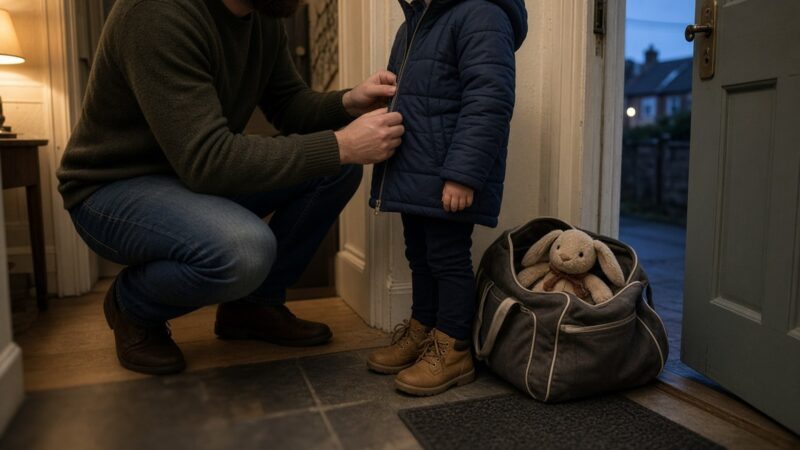
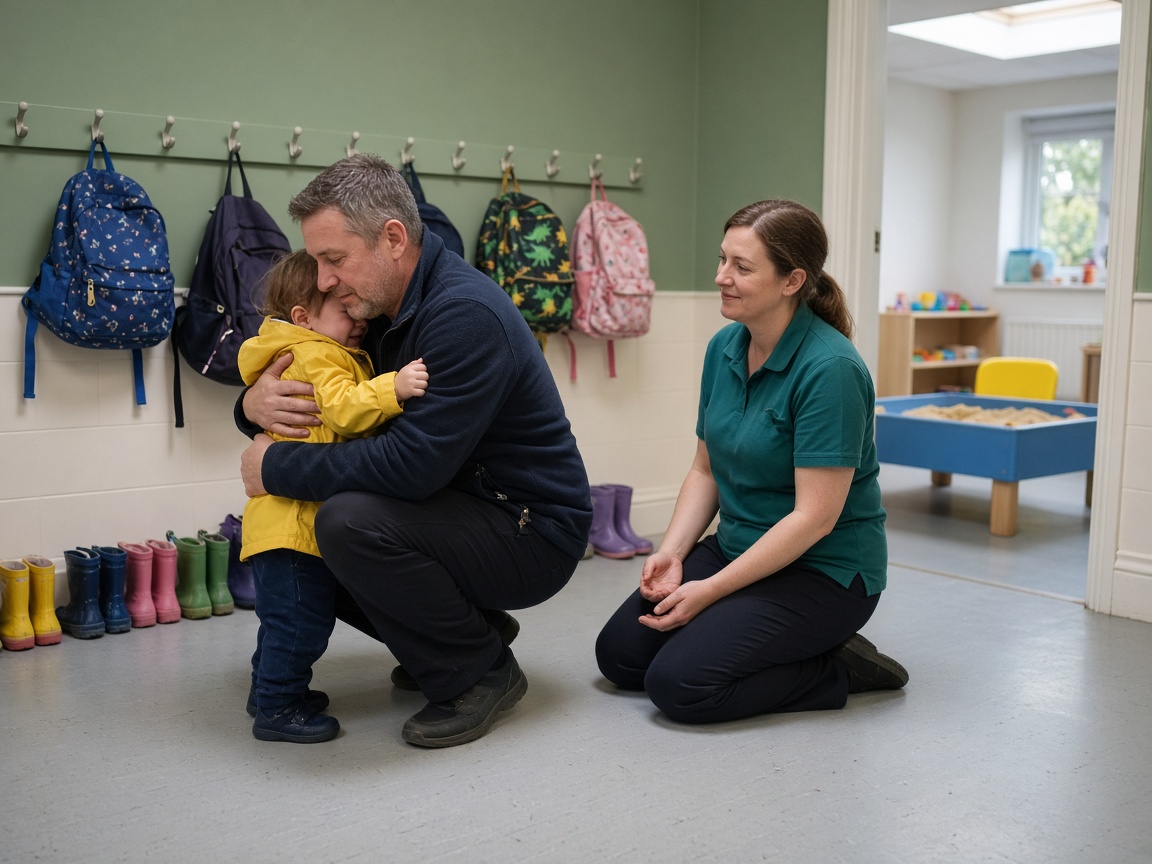
Now then. If you do the nursery run, you’ll know the moment. Coat half off, little hands locked round your neck, and a sound coming out of them like you’re leaving them on a hillside rather than in a warm room full of paint and toy diggers. Then the walk back to the car, which is the longest 40 yards in Britain.
Netmums ran a piece on 22 October asking exactly the question most of us have asked ourselves on that walk. They spoke to Dr Tara Porter, a clinical psychologist at Central Health London, about why some children cry every single drop off, how long it should last, and when it’s worth worrying. I’ve put what she said alongside the NHS advice and what parents are saying on the forums, because plenty of little ones are about to have a week off for half term, and the first morning back can undo a fair bit of settling.
What the psychologist actually said
The headline is reassuring. Dr Porter told Netmums: “Some distress in children when you drop them off at nursery is normal, especially when they first start, but you would hope that gets better in time.”
How long it takes, she said, can depend on how old your child is and how often they go. Two mornings a week is less time to get used to a place than four days.
Her most useful point, I think, is that the tears at the door aren’t the whole story. What matters more is what happens after you’ve gone. In her words: “Parents should be talking to the nursery and finding out what the pattern is when they leave, for example, how long they cry for, and how long it takes for them to be settled with comfort or in play.”
And if the nursery is a good one and the crying stops soon after you leave? “I would not worry too much,” she said.
She also pointed out that kids are all different. Some cry more easily, and some are happier somewhere smaller and quieter, like a childminder. That isn’t a failure on anyone’s part.
The NHS says much the same
The NHS page on separation anxiety says it’s common in young children between about 6 months and 3 years, and can come back at other times of stress. It calls it a normal part of development and says children usually grow out of it.
There’s one line on that page I’d like every guilty parent to read twice. It says separation anxiety “is usually a sign of how well you have bonded with them.” So the screaming on the doormat is, in a funny sort of way, a compliment.
It also says leaving your child with another carer won’t damage them. It helps them learn they’ll be OK and that you come back.
What parents are saying
On a long running Netmums Coffeehouse thread, a mum describes a little girl who was absolutely fine for five weeks, then had one wobbly day when her usual teacher was off, and cried at every drop off for months afterwards. Another parent in the same thread says her daughter had to be peeled off her each morning, yet staff said she stopped as soon as Mum was out of sight and she came home full of who she’d played with.
The crying is real. So is the happy child at pick up.
Over on a Reddit thread about whether the “favourite” parent should do drop off, someone who works with little ones made a point I hadn’t thought of. Some kids cling to one parent and aren’t nearly as fussed leaving the other, and it might have more to do with how that parent feels and acts at the door than who the child prefers.
Siân manages a nursery, and she says much the same over tea most weeks. The ones who make a scene at the door are very often the ones on the floor with the playdough ten minutes later. I’ve seen worse on a Saturday night shift, but I’ll admit Osian’s nursery door still gets me some mornings.
What dads can actually do at drop off
None of this is magic, and some mornings it’ll still go wrong. But these come up again and again.
- Keep the goodbye short and the same every time. The Netmums piece suggests calm, predictable goodbyes. Parents on the Netmums thread swear by a little routine: hang the coat up, put the bag on the peg, a cuddle, then a wave at the window. Then go. Hanging about tends to drag it out.
- Don’t sneak off. It’s tempting when they’re distracted, but Netmums points out that slipping away without saying goodbye can make it harder for your child to trust what happens when you leave.
- Hand them over yourself. If they’re small enough to be carried, pass them to their key person rather than waiting for staff to take them off you.
- Smile, even if you don’t feel it. The NHS advice is to wave goodbye confidently and happily, because little ones pick up on your tension. Save the wobble for the car.
- Tell them what happens next. The NHS suggests talking about what you’ll do together when you pick them up, so there’s something to look forward to. “After lunch I’ll come and get you and we’ll go to the park” is plenty.
- Send something from home. A favourite soft toy or something that smells of home can help. Check the nursery is OK with it first.
- Make the time at home count. Dr Porter says it’s about the overall balance, and suggests parents focus on good time with their child at other points in the day and week. Reading together, being with them while they play, cuddles and lots of chat.
Ask the nursery the right question
This is where dads can really help. Instead of only asking “did they settle?” at pick up, ask how long the crying lasted after you left, and how they came round. Was it a cuddle with their key person, or did they wander off to the sand tray? If you’re the one doing drop off, you’re the one who can ask.
In England, the early years foundation stage framework says every child at a nursery must be given a key person, whose job includes helping the child get familiar with the setting and building a relationship with parents. Nurseries also have to tell you who that person is. Wales and Scotland have their own standards, so if you’re not sure who your child’s main person is, just ask. Then use their name at the door, so your child hears it from you too.
Half term is worth a mention too. If your little one is off for a week, a few tears on the first morning back are pretty normal. A chat in the car about who they’ll see, and the same goodbye as before, tends to do more than a long speech at the door.
When to get some help
Most drop off tears fade. But the NHS says to talk to your health visitor if your child’s separation anxiety is causing them a lot of distress, if they’re upset for a long time after you’ve left, or if it’s been going on for more than a few weeks.
Dr Porter told Netmums that if a child stays distressed for long periods, struggles to join in or seems more and more unhappy about going, it’s worth sitting down with the nursery to talk about what support they can offer.
The NHS page on anxiety in children has more on signs to look out for, like sleep going wrong, bad dreams or a child who’s suddenly much more clingy and tearful at home too. Your GP is a good place to start if you’re worried, and the YoungMinds Parents Helpline on 0808 802 5544 is free (check their site for opening hours).
And be kind to yourself, butt. Walking away from a crying toddler is horrible, and doing it doesn’t make you a bad dad. It makes you a dad with a job to get to, a child who loves you, and a nursery full of people who are, very likely, already handing them a crayon.

Join the Dadsnet crew
Weekly dad stuff that actually helps. No spam, just the good bits.