Right, so Alfie broke up on Friday, Rosie is still at nursery, and the rota on the fridge says I’m on lates Tuesday and Wednesday. Gemma is at the surgery most of the week. If you’ve spent Sunday night doing that same jigsaw with a calendar and a brew, you’re not on your own. Put it that way.
Most schools in England and Wales are off this week, 26 to 30 October (ours in Leeds included). But a growing number of families have had a harder time of it, because their kids’ schools don’t break up on the same dates any more.
Two weeks off for one, one week for the other
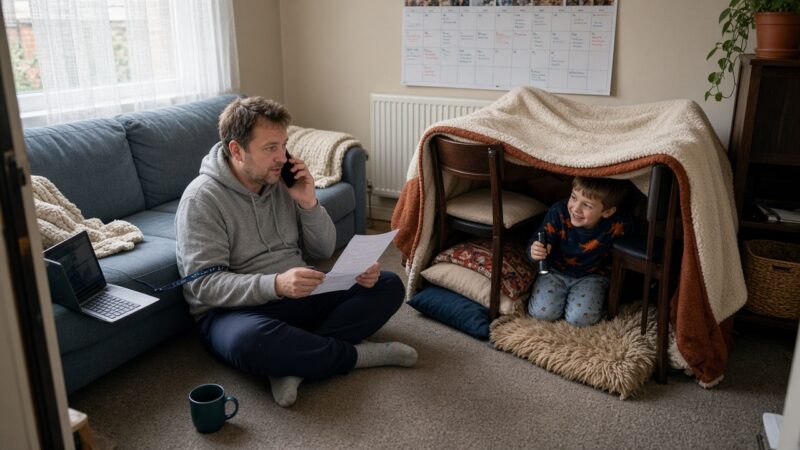
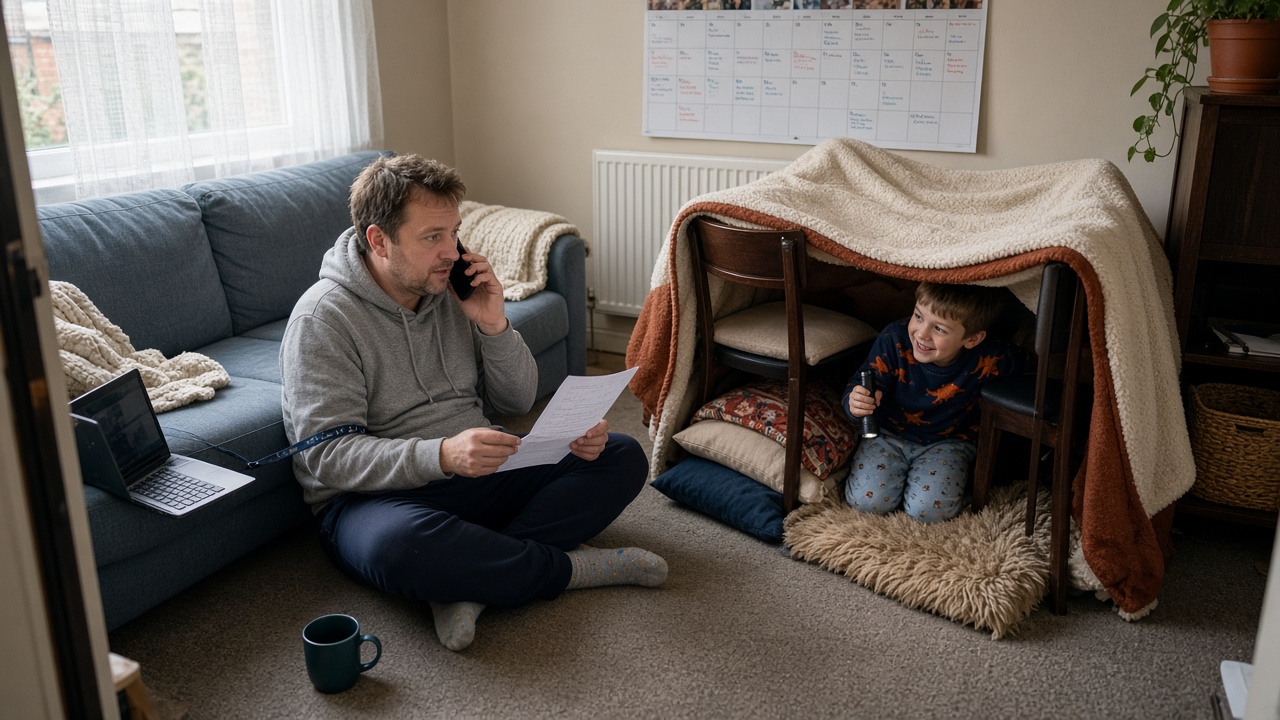
Netmums ran a piece on 25 October by Lucy Ransley, a mum of three and former teacher. Her son broke up on 15 October for two weeks and a day. Her daughters only get one week, starting a week later. So one child at home this week, all three off next week, and two weeks of juggling around a job. The only holiday club she could use for her son was £65 a day, so she booked one day and has spent the rest working round a lad building dens in the living room.
Her line that stuck with me: “Working from home gives me flexibility, and I’m grateful for it. It doesn’t magically create childcare.”
She isn’t a one off. BBC News reported on 17 October that several councils, including Nottinghamshire, Bromley and the Isle of Wight, have gone for a fortnight this year, and academies can set their own dates anyway. Surrey switched to two weeks this year but has already decided to go back to one week next year. And a Teacher Tapp survey reported by The Independent found 15% of state school teachers in England said their school had a two week October half term this year, up from 12% last year and 7% in 2023.
To be fair, there are two sides. Teachers say the autumn term is long and knackering, and plenty of families like the cheaper holiday in the second week. But if you’ve got one child at primary and one at secondary on different calendars, or you just can’t get the time off, it’s a headache.
What parents are saying
On a Mumsnet thread about two week half terms started on 16 October (it runs to well over a hundred replies), the same points come up again and again. Several people say holiday clubs near them still follow the council dates, so one of the two weeks has hardly any provision. A lone parent who works full time says the extra week would have reduced her to tears when her son was younger. Someone else mentions kids spending the extra week sat in the break room at a parent’s work, on a phone, because there’s nowhere else for them to go.
And a few school staff point out, fairly, that the children still get the same number of school days across the year. It’s moved, not lost. Which doesn’t help much on a Tuesday when you’re due in at two.
What you can actually ask your employer for
This is the bit I wish someone had told me years ago. You’ve got more options than “use your holiday or phone in sick”, but they all have rules. These are for employees in England, Scotland and Wales, and your contract can give you more than the legal minimum, so check that first.
- Annual leave, with notice. Most people on a five day week get at least 28 days’ paid holiday a year, according to GOV.UK. The default notice is twice as long as the leave you want plus a day, so three days’ notice for one day off, unless your contract says something different. Your employer can say no to particular dates, but they have to tell you in time too.
- Unpaid parental leave. This is the one hardly anyone uses. GOV.UK says eligible employees get 18 weeks for each child, up to their 18th birthday, with a limit of 4 weeks per child in any year. It’s usually taken in whole weeks unless your employer agrees otherwise or your child is disabled, and you need to give 21 days’ notice. Your employer can delay it for a significant business reason, but has to put that in writing within 7 days and offer new dates within 6 months. It’s unpaid, mind, so it’s a budgeting decision as much as anything.
- Time off for dependants. This one is for genuine emergencies, not planned cover. GOV.UK lists things like a childminder or carer not turning up, or a nursery closing unexpectedly. It doesn’t cover something you knew about in advance, so half term itself won’t count, but a holiday club cancelling on the morning might. Your employer doesn’t have to pay you for it.
- Flexible working. Every employee can make a flexible working request from day one in a job, covering hours, start and finish times, days and where you work. Your employer has to deal with it reasonably but can refuse for a good business reason. Worth thinking about for next year’s school holidays, not just this week.
Ask me how I know that last one matters. I spent two summers swapping shifts by text with lads who owed me favours before I actually sat down with my manager and asked properly.
Help paying for holiday clubs
If you’re paying for a holiday club or childminder, check two things before you hand over the cash.
First, Tax Free Childcare can be used for holiday clubs, not just nursery. For every £8 you pay in, the government adds £2, up to £500 every three months per child (more if your child is disabled). Kids need to be 11 or under, you usually need to be working, and the club has to be registered and signed up to the scheme. So ask them.
Second, if you’re on Universal Credit you may be able to claim back up to 85% of childcare costs, and that includes holiday clubs from a registered provider. You pay up front and claim it back, which is a squeeze, so speak to your work coach if that’s a problem.
You might also have heard of the free holiday clubs with meals, the holiday activities and food programme. The government guidance says its main periods are Easter, summer and Christmas, though councils can choose to run some half term sessions. It’s for children who get what’s now called targeted free school meals, so check your council’s website rather than assuming it’s on this week.
What about leaving older kids at home?
If you’ve got a secondary age kid, you might be wondering whether they can just stay in while you’re at work. The NSPCC puts it plainly: “There’s no legal age a child can be left home alone, but it’s against the law to leave a child alone if it puts them at risk.”
The charity says it wouldn’t recommend leaving children under 12 home alone, particularly for long stretches, and that babies and toddlers should never be left alone. For older kids it suggests talking to them about how they feel, going over the ground rules and what to do in an emergency. Some 14 year olds are fine with it. Some aren’t, and that’s fine too. The NSPCC has a quiz on that page that’s worth doing together.
A few things that help on the day
None of this is clever, and a fair bit of it comes straight from the parents in that BBC piece and on the forums.
- Swap days with another family. You have theirs on Tuesday, they have yours on Thursday. Two days covered for the price of one chaotic day with four kids.
- Split the week, not the day. Trying to work from home and parent at the same time, all day, is how you end up doing both badly. If you can, one of you takes mornings and the other takes afternoons, or whole days each.
- Grandparents with a plan. If they’re helping, a list of what’s in the fridge and when tea is goes a long way. They’ve done it before, mind. They just haven’t done it with your kids’ current rules.
- Get next year’s dates now. Most councils publish term dates well ahead, but academies set their own. If you’ve got two kids at two schools, put both calendars side by side today, before February half term sneaks up.
And if this week is a mess, it’s a mess. Kids remember the den and the trip to the park far more than the day they watched a bit too much telly while you were on a call.
Anyway. Friday’s coming.

Join the Dadsnet crew
Weekly dad stuff that actually helps. No spam, just the good bits.