
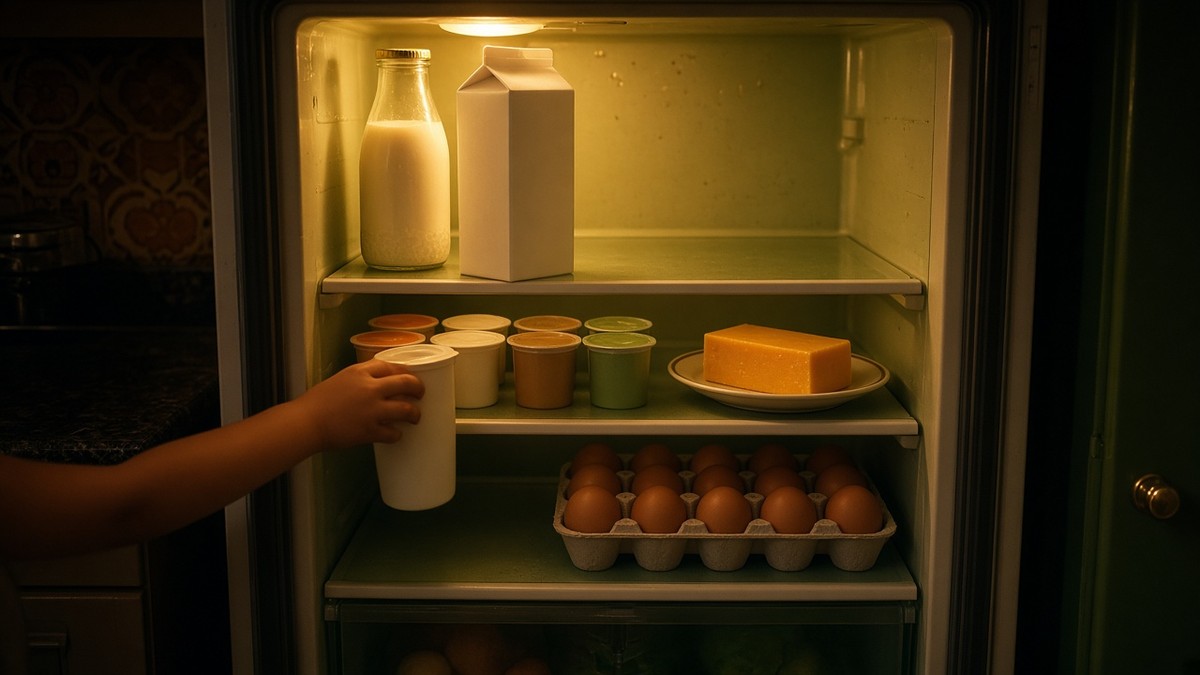
Plenty of UK fridges now have a carton of oat or soya drink sat next to the cows’ milk, or instead of it. Some families have switched for allergies, some for the planet, some because the kids just prefer the taste on their cereal. A new study out this week says that swap, even a partial one, could leave children and teenagers short of a few nutrients most of us never think about. Iodine is the big one.
What the study found
Researchers at the University of Surrey and Queen’s University Belfast published the work in The Lancet Planetary Health. They took food diary data from the UK’s National Diet and Nutrition Survey, covering more than 3,500 people aged from 18 months to 100, and modelled what would happen to their intake if some or all of their milk, yoghurt and cheese was swapped for plant based versions on the market. They looked at four nutrients that dairy supplies a lot of in the UK: iodine, calcium, riboflavin (vitamin B2) and vitamin B12.
According to the University of Surrey, even modest swaps led to drops in all four, and iodine was hit hardest. Replacing a fifth to a third of dairy with current plant based products pushed the share of teenage girls not getting enough iodine from 54 per cent to 65 per cent, and women aged 19 to 49 from 32 per cent to 42 per cent. If all dairy was replaced, the researchers estimated 80 per cent of teenage girls and 72 per cent of teenage boys would fall short. Young children, teenagers and women came out worst.
The reason is fairly simple. The team checked 146 plant based milks, 76 yoghurts and 67 cheeses. As The Guardian reported, 61 per cent had added calcium and 46 per cent added B12, but only 19 per cent were fortified with riboflavin and just 12 per cent with iodine.
Why iodine matters for kids
Iodine is a mineral the body uses to make thyroid hormones. The British Dietetic Association says those hormones are needed for growth, metabolism and a baby’s brain development in pregnancy and early life. It also says milk and dairy are the main source of iodine for most people in the UK, with white fish and eggs the other good sources.
So if a family quietly drops most of its dairy and the replacement carton has no iodine added, the kids lose their main supply without anyone noticing. Nobody feels low on iodine. That’s the problem.
Lead author Dr Sarah Bath, quoted by Netmums, said the UK is particularly vulnerable because, unlike many other countries, it has no iodine fortification policy such as adding iodine to salt.
The caveats worth knowing
This is a modelling study. It estimates intake from what people wrote down they ate. It did not test anybody’s blood or urine. Professor Tom Sanders of King’s College London told Netmums that iodine deficiency can’t be reliably predicted from diet records, because the iodine in food depends on the soil it was grown in, and he said deficiency is rare in the UK. The Vegan Society’s dietitians called the study misleading, pointing out that most plant based alternatives sold here are fortified with calcium and vitamin D, and that they have always advised choosing fortified versions.
So nobody is saying oat milk is dangerous. The point is narrower. Some cartons are much better than others, and you can’t tell which from the front.
The researchers’ own answer is policy rather than panic. Their modelling found that making fortification of plant based alternatives compulsory stopped the drop in all four nutrients, although iodine was still low for many teenage girls. Adding iodine to bread as well brought the share of teenage girls falling short down to 37 per cent.
What dads can actually do
Right. If your family uses plant based milk, yoghurt or cheese, here’s the practical bit.
- Flip the carton over. Check the ingredients and nutrition panel for iodine (often listed as potassium iodide or potassium iodate), calcium and vitamin B12. The BDA’s advice is to choose a plant based drink that is fortified with iodine.
- Organic often means unfortified. Many organic plant drinks have no added vitamins or minerals at all, so check before assuming.
- Unsweetened, from age one. The NHS says unsweetened, calcium fortified soya, oat or almond drinks can be given from the age of one as part of a healthy balanced diet. Before one, babies need breast milk or first infant formula.
- No rice drinks for under fives. The NHS says children under five shouldn’t have rice drinks because of the levels of arsenic in them.
- Think about the rest of the plate. If dairy is mostly gone, white fish like cod or haddock and eggs help with iodine. The BDA says seaweed and kelp are not a reliable source and kelp supplements shouldn’t be used.
- Teenagers are the ones to watch. The study flags teenage girls in particular, and that’s also the age when kids go vegan or dairy free on their own. Worth a calm chat about what they’re swapping in, not a lecture.
- Ask before you supplement. If your child is on a strict dairy free diet because of allergy or choice, your GP, health visitor or a dietitian can look at the whole picture before you start buying vitamins.
From a kitchen point of view, the cheapest fix is often just a different carton on the same shelf. The fortified ones usually sit right next to the unfortified ones. Take ten seconds to read the side.
If your family is happy with cows’ milk, nothing here changes. The NHS still says whole or semi skimmed milk is fine as a main drink from age one, and skimmed or 1 per cent shouldn’t be the main drink for under fives. This one is really for the households where the oat carton has quietly taken over the fridge door.

Join Dadsnet
Weekly dad stuff that actually helps. No spam, just the good bits.