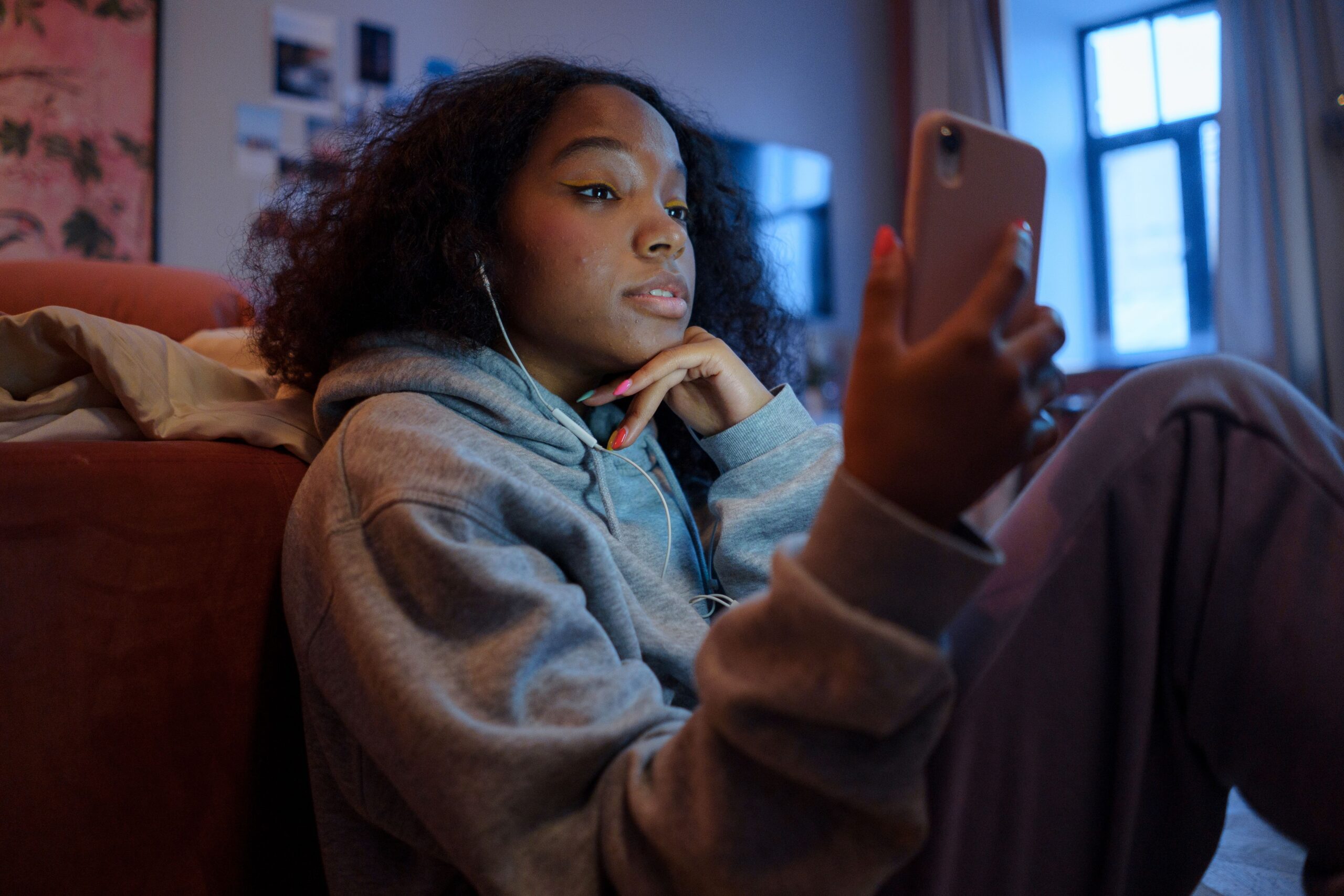
The UK government has announced a new set of digital restrictions aimed at 16- and 17-year-olds, introducing default midnight to 6 a.m. social media curfews and a crackdown on addictive app features.
The rules, scheduled to take effect in Spring 2027, follow the government’s landmark decision to ban social media entirely for children under 16. The new measures for older teenagers are designed to prevent a “cliff edge” of sudden exposure to highly engaging online features the moment a child turns 16.
However, unlike the outright ban for younger children, these new settings for older teens are voluntary and can be turned off by the user.
What is Changing for 16- and 17-Year-Olds?
By law, social media platforms will be required to apply several strict safety settings by default for teenagers in this age bracket:
- The Midnight Curfew: Apps will automatically restrict access between midnight and 6 a.m.
- Disabled Autoplay: Features that automatically start playing the next video in a sequence will be switched off by default.
- No Infinite Scroll: Personalised algorithmic feeds that continuously recommend new content to keep users scrolling will be deactivated by default.
The “Opt-Out” Function
Because these rules are default settings rather than a hard ban, 16- and 17-year-olds have the option to manually turn the curfew and scrolling restrictions off in their settings if they choose.
While ministers argue this strikes a balance between protecting teens and granting them independence, critics have raised concerns about how effective the voluntary restrictions will be in practice.
The Data Behind the Curfew
The policy is backed by a government-commissioned pilot scheme involving more than 300 teenagers and their parents across the UK.
The Department for Science, Innovation and Technology (DSIT) tested various restrictions, including strict screen-time limits and deleting apps entirely. The trial concluded the following:
- Overnight curfews were the most manageable restrictions for families to maintain.
- Families reported that the overnight curfew quickly became part of their routine and resulted in improved sleep quality and concentration during the day.
Safeguards for AI Chatbots and Education
The government’s plan also targets the rapid growth of artificial intelligence, introducing specific rules to protect children under 18 when using AI chatbots:
- Mandatory Screen Breaks: Under-18s will face required, regular prompts to take breaks while using AI chatbots.
- Crackdown on Unverified Therapy: The government is working with regulators to address AI services offering unverified or misleading mental health advice, with the power to ban chatbots posing a serious threat.
- Digital Literacy in Schools: Starting in September, Relationships, Sex, and Health Education (RSHE) classes will teach children to critically analyse AI and identify online misinformation. By September 2028, these media literacy skills will be fully integrated into the National Curriculum.
The first set of regulations is expected to be laid before Parliament by the end of this year, with the rules officially coming into force in Spring 2027.