
We expected the challenges of new parenthood. What we didn’t expect was a mental health crisis that would leave me raising our newborn alone while my wife spent seven weeks in hospital.
Before our son was born, I thought I had a reasonable idea of what becoming a dad would look like. I expected sleepless nights, a steep learning curve, and moments of overwhelm mixed with joy. What I did not expect was how quickly everything could unravel, or how much of early fatherhood would become about holding things together while the person I love was slipping out of reach. My wife has Bipolar I disorder, and while we went into the birth aware of the risks and with plans in place, there is a difference between understanding something intellectually and living through it in real time.
The waiting around a natural birth turned out to be more than just uncomfortable. It was destabilising for her. The uncertainty, the lack of control, and the slow build-up of anxiety all took their toll. I could see it happening, but I do not think either of us fully grasped how much it was affecting her. In hindsight, I wish we had had more thorough conversations with our care team about alternatives, particularly a planned C-section, and how removing some of that uncertainty might have eased the pressure she was carrying in those final weeks. At the time, we were focused on doing things the right way. Looking back, I think we underestimated how important predictability and stability were for her mental health.
We also focused heavily on the birth itself and not nearly enough on what would come after. We had a plan for how our son would enter the world, but not a clear plan for what we would do if her mental health began to shift in the days and weeks that followed. If I could go back, I would spend more time having those conversations. What might the early warning signs look like? Who do we call? How quickly do we act? It is not about expecting the worst, but about being prepared enough that you do not lose time when it matters most.
Eleven days after our son was born, everything changed. The hormonal crash, combined with the physical and emotional strain of childbirth, triggered a manic episode that escalated quickly. Within days, she was admitted to hospital, and I found myself facing a severe episode I had seen before. It was intense, consuming, and exhausting, and no less overwhelming for me or our family simply because it was familiar. Experience gave me some awareness of what was happening, but it did not soften the impact, especially with a newborn in my arms and the weight of responsibility pressing in from all sides. There is always a moment where you question what you are seeing, whether it is stress or something more, and learning to trust that instinct and act early is something I have come to understand the importance of.
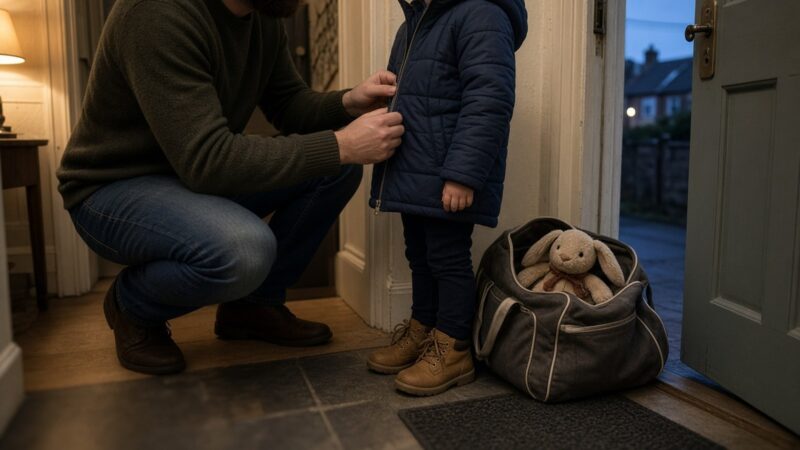
After ten days, she was discharged, but her stability was fragile. Two weeks later, she was hospitalised again, this time for five weeks. In total, she spent seven weeks in hospital during the first three months of our son’s life. The hospital was over an hour away, and because of the restrictions, she could not see him during that time. That separation was heartbreaking for both of them, and the weight of it fell squarely on me. I became, almost overnight, the sole parent, managing every feed, every night waking, every decision, while carrying a constant undercurrent of worry about my wife.
Those weeks were a test I had always feared. From the moment we decided to have a child, I knew this was a real possibility, and yet I tried to push that fear aside and hope for the best. There were no visits from friends and no family stepping in, just a quiet intensity that made everything feel heavier. Supporting someone with severe mental illness is not about fixing things. It is about standing beside someone who is struggling in ways you cannot control, showing up consistently even when there is no clear way to help. You learn quickly that love does not always look like connection. Sometimes it looks like patience, presence, and staying, even when it is hard.
Very quickly, I had to let go of any idea of doing things well in the traditional sense. The house did not matter. Routine did not matter. Even my own expectations did not matter. What mattered was that my son was cared for, that I showed up for my wife, and that we got through each day. There is a kind of permission you have to give yourself in those moments to lower the bar completely and accept that, for a time, survival is enough.
One of the most important lessons I have taken from this experience is just how critical quality sleep is for someone living with mental illness, particularly with Bipolar I. Sleep is not just rest, it is stability. When it is disrupted, everything else becomes more fragile. Looking back, I do not think we fully appreciated how important it would be to protect her sleep in those early weeks. For many parents dealing with mental illness, exclusively breastfeeding is often not realistic or safe, and that is okay. That’s something that we, unfortunately, learned the hard way. If I could offer one piece of practical advice, it would be this: have explicit conversations before your baby arrives about how you are going to prioritise sleep for your partner. That might mean planning for bottle feeds at night, taking on most or all of the night shift, or structuring things in a way that allows for longer, uninterrupted stretches of rest. It is not easy, especially when you are both exhausted, but protecting sleep can be one of the most important ways you support your partner’s mental health.
When she finally came home after the second hospitalisation, she was still unstable. Just as I was beginning to adjust to having her back, my own father passed away. The grief came suddenly and cut through everything else. It was a stark reminder that life does not pause, even when you are already stretched to your limits. Juggling my son, supporting my wife, and processing the loss of my father felt overwhelming in a way I cannot fully put into words. I was unable to attend my father’s funeral, and in many ways, I had to put grieving the loss of my father on the back burner until things were more stable in our home. And yet, day by day, I kept moving. The days blurred into a rhythm of survival, broken up by moments of exhaustion, quiet reflection, and occasional glimpses of something lighter.
Recovery was slow and uneven. There was no clear turning point, no moment where things simply went back to normal. Instead, it was a gradual process of rebuilding. We were learning how to be parents together while also navigating her illness, her treatment, and her stability. Fatherhood, for me, became less about expectation and more about presence. Less about getting things right, and more about continuing to show up.
Looking back, the hardest and most important lesson I have learned is that supporting a partner through mental illness is not about having the right answers. It is about staying. It is about showing up consistently, even when it is exhausting or painful, and recognising that this experience shapes you too. It asks more of you than you expect, but it also reveals a kind of quiet strength, the kind built in small, repeated acts of care and commitment.
If you are a dad going through something similar, it can feel incredibly lonely. It can feel like too much. But what you are doing matters. Showing up matters. Even when it feels invisible, even when it feels like you are just getting through the day, it counts. More than you probably realise.
It was these experiences that inspired me to create DADit, a specialised parenting platform designed to help fathers navigate the mental load of parenthood in a more structured and supported way. At its core is Ask DADit, an AI-powered personal mentor that offers instant, context-aware guidance for everything from developmental milestones to those late-night moments when you are not sure what to do. The app also simplifies the practical side of parenting, with hands-free, voice-activated logging for feeds and diapers, and automated insights that reduce the need to constantly track and remember everything. Features like Family Sync help both parents stay aligned without the friction of manual coordination, while gamified streaks and milestones recognise the consistency and effort that often go unnoticed.
For me, building DADit was about taking what I learned in the hardest months of early fatherhood and turning it into something useful for other dads. Something that helps make the invisible load more visible, the overwhelming moments more manageable, and the journey itself a little less isolating. Because even when fatherhood does not begin the way you expected, and even when it asks more of you than you thought you could give, showing up again and again is what makes the difference.