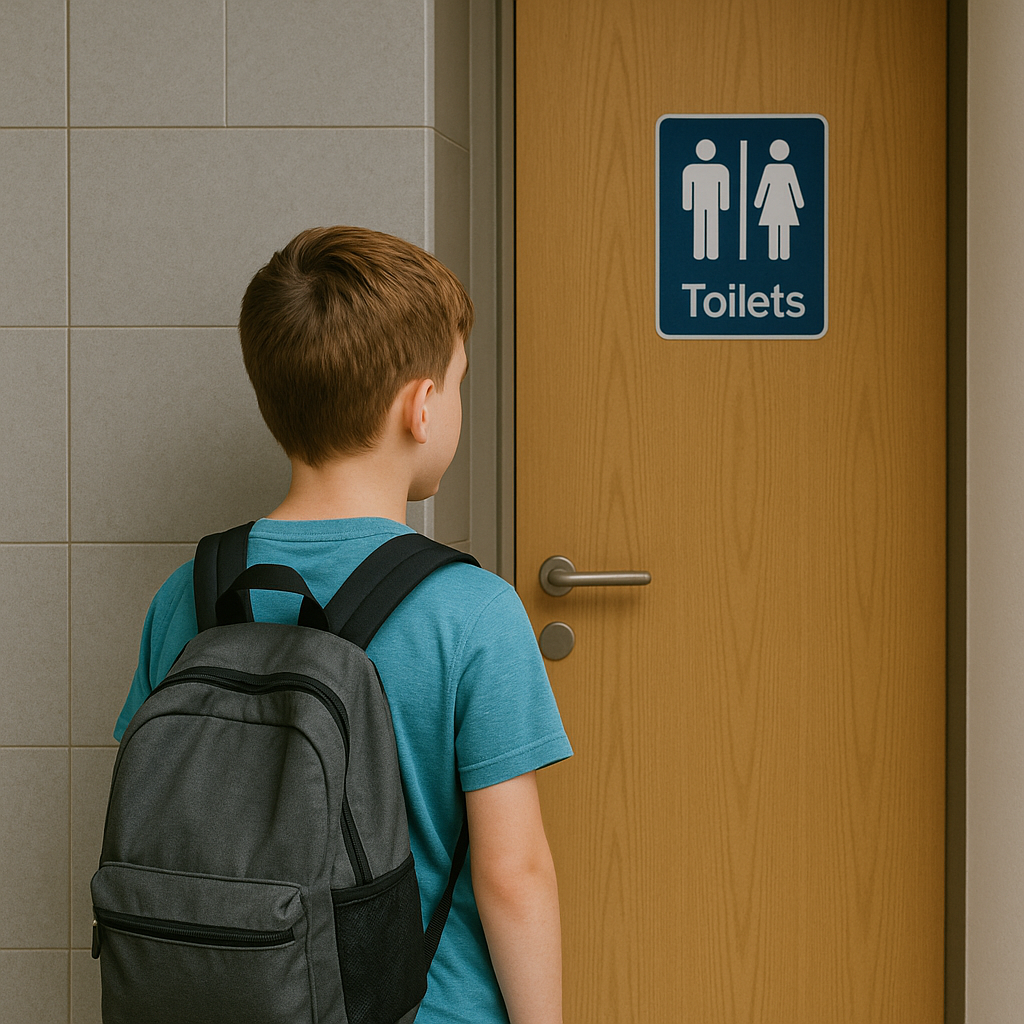
When your child says “I’ll pop to the loo by myself,” it sounds perfectly normal. But as a parent or carer of a child in the 4–11 age bracket, it’s worth pausing for a moment. According to child psychologist Aisling O’Connor, allowing younger children to use public toilets completely unaccompanied can carry risks.
What prompted the warning
On Instagram, Aisling – who works with kids and parents – posted a compelling message to her 110,000 followers:
“Never ever ever let a young child go into a public toilet alone…”
Her concern centres on how public restroom layouts (lockable doors, hidden stalls, unsupervised corners) can create a situation where a child is out of sight, out of reach and possibly vulnerable.
What makes public toilets a different kind of risk
Here are the factors that raise the risk level:
-
They often provide privacy for the user — which is generally what you want — but paradoxically this makes adult supervision harder. Your child may disappear behind a locked door or vanish into a hidden stall, and you won’t know what’s going on.
-
Children under approximately eight years old typically do not yet have the full cognitive or situational awareness to assess risky adult behaviour. They may not recognise warning signs, or know what to do if something feels wrong.
-
If something happens — even if it’s simply a stranger making the child feel uneasy — it can happen incredibly fast in that environment. Aisling emphasises that this isn’t about making you paranoid, but about acknowledging the limitations of supervision when your child’s out of sight.
So what’s the safe-age guideline?
There’s no perfect cut-off. Every child is different. But you can work with a practical framework:
-
Under 8 years old: Ideally, accompany your child (go in with them or wait outside) or ensure they use the bathroom with a buddy or older sibling.
-
Between ~8–10 years: Many children start to handle low-risk settings alone — say a busy café or remainder of a family outing — but you’ll want to assess the type of facility: is it secluded? how visible is the entrance? is there a parent waiting close by?
-
10 years and up: Most children have a better sense of their surroundings and can handle public toilets on their own in reasonably safe settings — but again, you still need to check: how busy is it? how private? how safe do you feel about the place?
Your gut matters. If you walk into a public loo and your instinct says “this doesn’t feel right” — trust that feeling.
Practical strategies for you and your child
1. The buddy system:
One of Aisling’s rules for her kids: “Don’t go solo – go together.” Having a buddy means they look out for each other, and if one feels uneasy, the pair can leave together. Framing it as “we’re looking out for each other” rather than “you’re being watched” helps with buy-in.
2. Body-safety conversations:
Talk to your child, in age-appropriate language, about what they can do to protect themselves:
-
Private areas are for hygiene, trusted adults or medical care only. Use correct anatomical terms and repeat these messages often.
-
If something doesn’t feel right — maybe an adult tries to help when you didn’t ask, or asks for secrecy — then they should leave immediately and tell you.
-
Secrets about their bodies? Not OK. They should know that they can always tell you everything, and you’ll listen calmly, believe them, and help.
3. Pre-visit checks:
When you know your child will have to use a public toilet without you right there:
-
Walk through it with them once so they know where you’ll wait.
-
Agree how long they should be (for instance: “If you’re not back in two minutes, I’ll come and get you”).
-
Ensure they have your number (on them or memorised) and know where to go if they feel scared or unsafe.
Why this is not about alarmism
The goal here isn’t to make your child never go anywhere unsupervised or to blanket-ban public toilets. That would be unrealistic — your child will use hundreds of public toilets before adulthood. The goal is: reduce risk, build awareness, and give your child the tools to act wisely when unsupervised.
By doing this you’re helping shape a child who can say: “I know what to do if something feels wrong.” And that’s one big step toward a teenager or adult who can navigate the world more safely.