By Sami Ward, founder of Chaos to Calm
Content note: this article talks about suicide and self harm. It doesn’t describe methods, and support details are at the end.
Here’s a night that plays out in homes like mine.
It’s 2am and your partner’s phone lights up the ceiling. It’s your daughter, or your stepdaughter, in her bedroom a few steps along the landing. Sometimes she texts. Sometimes she rings.
Your partner is out of bed before you’ve properly woken. You hear her go along the landing, and then, through the wall, the low, steady voice you’ve learned to recognise. “I’m here. I’m not going anywhere. Stay with me.”
The young person on the other side of that wall is 17, and she has said the words every parent dreads, or she’s hurt herself and doesn’t know how to stop.
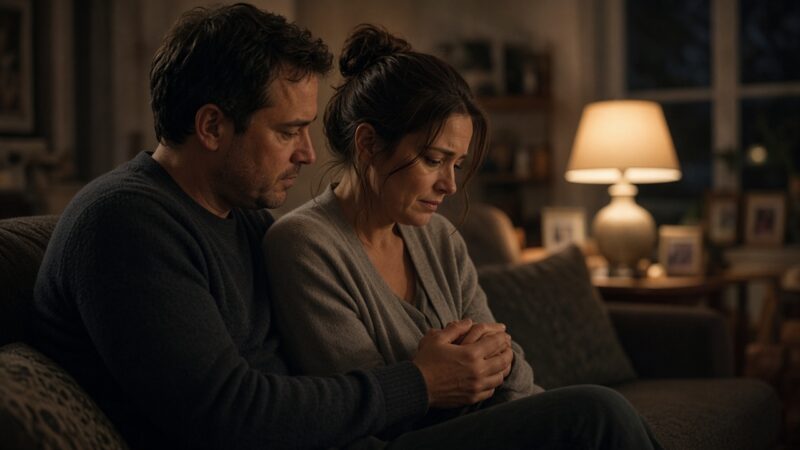
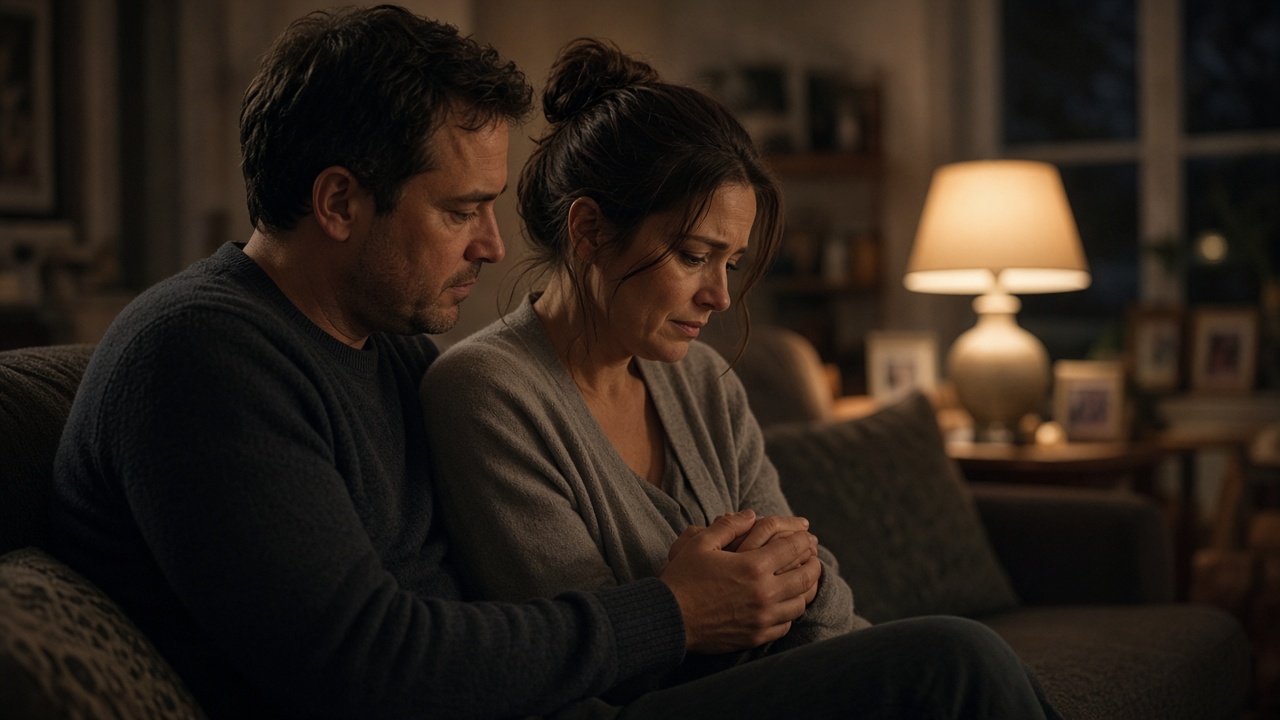
An hour or more later your partner climbs back into bed, shaking. And you say the thing you’ve been holding in.
“I just don’t get it. Why would she do that? She’s got everything.”
Your partner doesn’t answer. She turns away. What she heard wasn’t confusion. She heard one more person who thinks it makes no sense, from the one person she needed on her side.
I know that night because I’ve been the mum in it. I’ve taken those calls and answered those texts at 2am and 4am, trying to stay steady while everything in me was panicking, and I know how lonely that is. I’m not a clinician. I’m a mum who has lived it, who now supports other mums through Chaos to Calm, and who has learned the hard way what helps.
World Mental Health Day came and went on 10 October. The reminders were, rightly, about checking in on the person who’s struggling. Far fewer were about the person holding the phone, or the person lying next to her in the dark, thinking “I just don’t get it”. That second person is who this is for.
I’ve written “she” because I have a daughter, but everything here goes for sons too.
First, you are allowed not to understand
Plenty of dads are fixers. Something’s broken, you find the tool, you sort it.
This is the one thing you can’t fix that way, and not understanding it doesn’t make you a bad dad.
The trouble is what “I don’t get it” sounds like from the other side. To a young woman in pain, it sounds like “this makes no sense, so you must be making it up”. To her mum, it sounds like “you’re on your own”.
What you probably mean is “I’m frightened and I don’t know what to do”. Say that instead. It’s honest, and it lands very differently.
What’s going on
When a teen or young adult self harms or talks about suicide, it’s rarely about being difficult or winding anyone up. The NHS says self harm is most often a way of expressing or coping with emotional distress, and the reasons can include trying to feel in control, punishing herself, relieving unbearable feelings, or a cry for help. For many young people who struggle with emotional dysregulation of any kind, including Borderline Personality Disorder (also known as Emotionally Unstable Personality Disorder), feelings arrive harder and faster and last longer than they do for the rest of us. It’s pain that has got too big to carry, with no skills yet to manage it.
The NHS also says not everyone who self harms wants to end their life, and some people describe it as a way of staying alive through severe distress, but there is a clear link between self harm and suicidal thoughts. That’s why none of it gets brushed aside. And if it is a cry for help? That’s a cry that deserves an answer.
That’s also why “why would she do that?” can’t be answered by looking at what she has. A nice home and loving parents don’t switch the pain off.
This isn’t rare, either. The Office for National Statistics published its latest figures on 13 October: 6,162 suicides were registered in England and Wales in 2025. Suicide is also the biggest killer of people under 35. So it’s not a conversation to get wrong.
Why it hits differently at 17, 19 or 22
The moment a young person turns 18, the system treats her as an adult, and families feel it. In many areas, children’s services end and adult ones take over, with different rules and often long waits. She may tell you to stay out of it. Professionals may not be able to share information with you, although they can usually listen to your concerns. Yet she’s still in your house, or still ringing or texting your partner at 2am.
So the mum often becomes the only lifeline by default. That’s exactly why she needs someone steady beside her, and why “I don’t get it” lands so heavily.
What not to say
“Why would you do that?” “You’ve got everything to live for.” “Think what this does to your mum.” “You’re just doing it for attention.” The NHS specifically warns against calling it attention seeking. Each of those tells her she’s a problem to be solved.
What helps
For your child
- Say what’s under “I don’t get it.” “I’m scared too, I don’t fully understand, and I’m not going anywhere.” That one sentence does more than any speech.
- Ask directly. “Are you thinking about killing yourself?” Samaritans say the evidence is that asking directly can protect someone, because it gives them permission to say how they feel, and that anyone who talks about suicide should always be taken seriously. Then listen, without arguing or fixing.
- Ask how she’d like to be supported. NHS advice is to ask how she’d like to be supported, let her know you’re there, and try to understand her feelings without judging, rather than focusing on the self harm itself. Ask about the feeling, not just the injury.
- Let her keep some control, but don’t ignore danger. The NHS says not to force her to change what she’s doing or threaten to take away her control, but to get her medical attention when it’s needed.
- Stay calm and stay with her. She will read your panic. Slow your voice, sit with her, and say what you can see: “I can see how much pain you’re in.”
If she’s in immediate danger or has seriously hurt herself, don’t wait. If someone has attempted suicide, call 999 and stay with them until help arrives.
For her mum
- Believe her, even when you don’t get it. “I don’t fully understand, but I believe you, and I’m here.” That sentence can mean more than any advice.
- Ask how she is, and wait for the answer. Everyone asks how the young person is. Be the one who asks how she is.
- Agree a plan for when it all gets too much for her. Work it out in daylight, not at 2am. If she asks you for something, whether that’s taking over for ten minutes, giving her some space or sorting something else, do it first and ask later. When she’s in the middle of dealing with her daughter, she hasn’t got the energy to explain.
- Get her out of the house. When things are calmer, or when someone else is with her daughter, take her for a coffee or a wander round the garden centre, just to get some space, even for an hour.
- Don’t take it personally, and take small things off her plate. When she’s exhausted, short with you or glued to her phone, it’s rarely about you. Do the dinner, the shopping, the dull jobs, without waiting to be asked.
- Make it easier for her to get support. Asking for help can feel like admitting she isn’t coping. I thought that too. Tell her it isn’t failing, and help her find something just for her: a friend, a group, a counsellor.
For brothers and sisters
If there are other children at home, remember them too. They hear the phone calls, and they can feel scared, angry or forgotten without saying so. Spend time with them on their own, tell them what’s going on in words that suit their age, and let them know they can ask you anything.
For you
Fear, helplessness and anger are normal. The same figures show that men are more than three times as likely as women to die by suicide, and men in their early 50s have the highest rate of any age group. That includes plenty of dads reading this. Talk to someone: a friend, your GP, or Samaritans on 116 123. The NHS also reminds families that you may not be able to help on your own, and if you care for someone over 18 with a mental health condition, you can ask your local authority for a carer’s assessment to help you get support.
If you’re a stepdad
You may feel you’ve got no right to an opinion because you’re not her “real” dad. You don’t need a title to be a safe adult. Be steady and kind, don’t compete with anyone, and keep turning up. That counts for more than you think.
If you and her mum are no longer together
The same goes for you. Everything above still counts, wherever you live.
When the system is slow
The system can be slow, really slow. A GP is the usual starting point, NHS 111 is there for urgent mental health support, and a local crisis team may be involved if she has one. I know from my own family how long the waits can be, which is why the people at home matter so much in the waiting gaps.
What I’d say to any dad reading this
You don’t have to get it to be there. You just have to stay. A young person in pain doesn’t need a dad who understands everything. She needs one who doesn’t look away, and who is still there in the morning.
If you or someone you love needs support
- Samaritans: 116 123 (free, 24/7)
- Shout: text SHOUT to 85258 (free, 24/7)
- Childline (under 19s): 0800 1111
- NHS 111 for urgent mental health support
- 999 or A&E in an emergency
Sami Ward is the founder of Chaos to Calm (chaos-to-calm.org.uk), a support platform for mums of young adults experiencing emotional dysregulation and mental health crises.
Sources: ONS, Suicides in England and Wales: 1981 to 2025; Female First, report on the ONS figures; Express & Star (PA), PM on suicide among young people; NHS, why people self harm; NHS, how to help someone else; Samaritans, myths about suicide.