If the lights went out tonight and the taps ran dry, how long would your house last? Most of us would find a torch with a flat battery, half a bag of pasta we can’t cook, and a phone on 12 per cent.
That’s the gap the government’s new Be Ready campaign is trying to close. It’s been running for a few weeks now, and it’s started popping up in family news again, with Netmums running a guide on 9 November. So here’s what it actually asks of households, what’s worth doing first if you’ve got kids, and what you can skip panicking about.
What is Be Ready?
The advice went up on GOV.UK on 22 October. In a written statement to Parliament that day, Security Minister Dan Jarvis called it the start of a three year campaign, put together with the Scottish Government, the Welsh Government and the Northern Ireland Executive.
The idea is simple. If something knocks out power, water, phones or the internet for a while, households that can look after themselves for three days free up the emergency services for the people who need them most. Storms, floods and cyber attacks are the sort of thing the government has in mind.
The statement also gave a figure worth knowing. Government research found just 13 per cent of people in the UK feel prepared for an emergency that could cut them off from the services they rely on. So if your answer to the first question was “not long, to be honest”, you’re in very good company.
It’s advice, not a rule. Nobody is checking your cupboards.
The two things the government says matter most
Out of everything on the list, the statement picks out two key actions.
- Three days of bottled water and food that keeps. The Be Ready checklist says three litres of drinking water per person per day, with more on top for cooking and washing. Food should have a long shelf life and not need a fridge or cooking, like tinned meat, fish or veg, dried fruit and nuts. It also says to buy food you’d normally eat, which anyone with a fussy five year old will appreciate.
- The Priority Services Register, if you’re eligible. More on this below, because a lot of dads won’t realise it covers them.
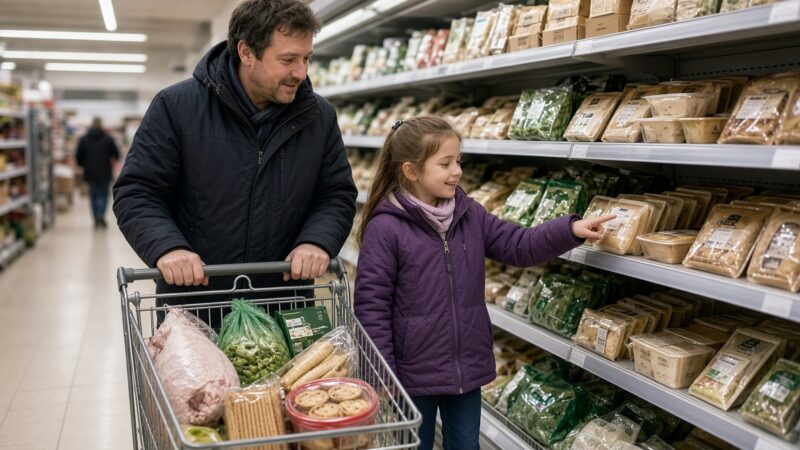
Do the sums for a family of four and that’s 36 litres of drinking water. That’s a lot of bottles to carry in from the car in one go, which is exactly why the advice is to build it up a few at a time on the normal shop.
The Priority Services Register is the quick win
This is the one that costs nothing and takes a few minutes. The PSR is a free register that tells your electricity, gas and water companies you may need extra help when supplies go off. The PSR website lists having children aged five or under at home as one of the reasons you can join, alongside things like health conditions, being of pensionable age, or relying on medical equipment.
What you get varies, but it can include bottled water being brought to you during a water cut, updates on when the power will be back, and a priority phone line. You sign up through your local electricity network operator and they share it with your gas and water companies, so it’s one form, not three. In Northern Ireland the equivalent is called the Customer Care Register.
If your youngest is under school age and you’ve not done this, it’s probably the single most useful thing in this article.
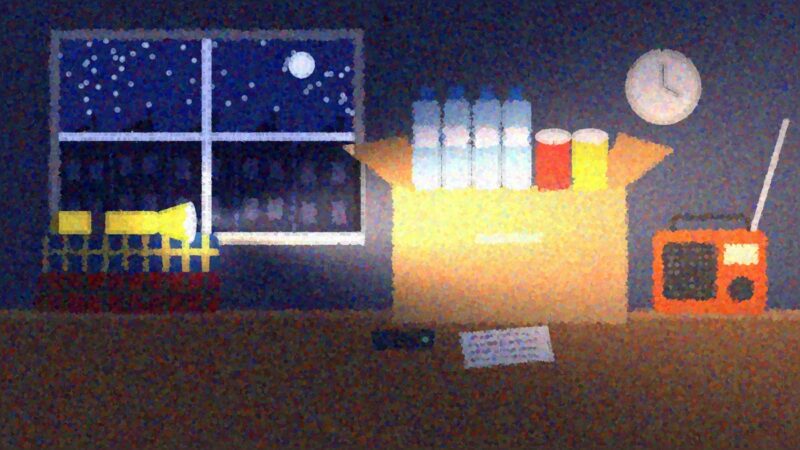
What goes in the box
The full checklist on GOV.UK is longer than the headlines suggest. Here’s the family version, in roughly the order it’ll matter.
- Water and food for three days, as above.
- A torch and spare batteries. The government says torches are safer than candles, which with small kids about is fairly obvious once you picture it.
- Blankets, sleeping bags and warm clothes. The checklist points out homes go cold quickly once the heating stops. In November that’s the real problem, more than the dark.
- A battery or wind up FM radio, plus the frequencies of your local and national stations written down. Most of us have never needed to know them.
- A charged power bank for phones.
- Some cash in coins and notes, in case card machines and cashpoints go down.
- Paper copies of passports, birth certificates, insurance details and important phone numbers, including anyone you’d need to check on, like an older relative living alone.
- A first aid kit, and a written list of any regular medication and doses.
- Hand sanitiser, wet wipes and bathroom bits.
- For babies: ready made formula, nappies and wipes. This one’s easy to miss. The checklist says ready to feed formula is best because you might not be able to boil water to make up powder safely, and the Food Standards Agency’s power cut advice makes the same point. A few cartons at the back of the cupboard could save a very long night.
- Pet food and water, if you’ve got a dog or cat relying on you too.
Keep it all together in one box or bag somewhere you can find in the dark. Tidy. The GOV.UK page suggests setting a reminder every six months to check dates and swap things out. Putting it in the calendar for when the clocks change works nicely, as you’re already faffing with the oven clock anyway.
If the power does go off
Now then. A few facts worth knowing before it happens rather than during.
- Call 105 to report a power cut in England, Scotland and Wales. In Northern Ireland it’s 03457 643643. Write it on the box.
- Keep the fridge and freezer shut. The Food Standards Agency says a fridge should stay cold for up to four hours. A full freezer should keep food frozen for up to 48 hours, or about 24 if it’s half full. Those are estimates, and every opening of the door lets the cold out.
- Eat the fridge food first, then defrosted stuff, then the tins. If it’s colder than 8°C outside, the FSA says food can be stored outside in a sealed box, out of the sun and away from animals.
- Never bring a barbecue or camping stove indoors. The NHS is very clear on this because of carbon monoxide, which you can’t see or smell. If you’ve got a gas boiler, a gas fire or a log burner, a carbon monoxide alarm in that room is worth having anyway.
- If you smell gas, the National Gas Helpline is 0800 111 999, any time.
Speaking as a paramedic, that carbon monoxide one is the line I’d underline twice. Cold families do understandable things to get warm, and a stove brought in from the shed is one of them.
Getting the kids on board without scaring them
The Be Ready guidance has a section on talking to children, and it’s practical rather than gloomy. It suggests teaching them how and when to call 999, helping them learn their home address and a parent’s mobile number, and practising those every so often. It also points to StayWise, a free site with emergency resources made for kids.
Netmums suggested letting children pick a favourite tin or snack for the box, which is a decent way of turning it into a family job rather than a scary one. Tell older kids where the box lives, and keep the tone light.
A few other bits from the GOV.UK page that are easy to do on a weekday evening:
- Check your child’s school or nursery has the right phone numbers for you.
- Add an emergency contact to your phone’s lock screen (often called ICE or Medical ID), so the emergency services can see it without your passcode.
- Know where to turn off your gas, electricity and water.
- Test your smoke alarms. The advice is once a month.
- Swap numbers with neighbours, or start a street group chat if there isn’t one.
It’s also worth knowing about Emergency Alerts, the government system that can send a warning to your phone in a life threatening emergency. It makes a loud siren sound for about ten seconds, even if your phone’s on silent, and it works on where you are, not where you live. The government says it will never email you or ask for personal details, so anything claiming to be an alert that does is a scam.
Do you need to rush out this week?
No. The government’s own advice is to start with what you’ve already got, then pick up an extra item or two on each shop to spread the cost. It also says not everyone will be able to do every step, and that’s fine. Netmums noted that retailers have warned panic buying helps nobody, and empty shelves are no use to the family who really can’t afford to stock up.
If you only do three things this month, make it these. Check if you can join the PSR. Put a few big bottles of water and some tins you’d actually eat in a box. Write 105 and the gas helpline number on a bit of paper and stick it on the fridge.
The torch with the flat battery can wait till Saturday. Probably.

Join Dadsnet
Weekly dad stuff that actually helps. No spam, just the good bits.