The school Christmas email has probably landed by now. Christmas jumper day, the fair, the nativity, the carol concert, Christmas lunch, a mufti day or two. For a lot of kids that list is pure excitement. For children with special educational needs and disabilities (SEND), and autistic children in particular, it can feel like the whole world has been rearranged without asking them.
That’s the point a recent Netmums piece made, drawing on advice counsellor Nina Shah shared with the training provider Counselling Tutor. Her suggestions line up closely with guidance from the National Autistic Society, the NHS and Action for Children. Here’s what it all boils down to, and where dads can take some of the load.
Why December is harder than it looks
Christmas changes almost everything at once. Different food at different times. Flashing lights in the living room. New smells from candles and diffusers. Busy shops, parties, relatives you haven’t seen since last year, and a jumper that itches. School timetables go out of the window for weeks.
The National Autistic Society says many autistic people feel calmer when they know what to expect, and some rely on set routines. When the routine goes, so does a lot of that sense of safety. The NHS also points out that some autistic children can become exhausted from trying to cope with daily life, which it calls autistic fatigue or burnout, and that they need space and time to rest. A December packed with events is a fairly reliable way to get there.
Every child is different, mind. Some kids with SEND love the chaos. The aim is to work out what your child finds hard, not to cancel Christmas.
Start with a plan, and share it
The simplest thing that helps is telling your child what’s coming. The National Autistic Society suggests thinking through each day: what time things happen, how you’ll get there, who will be there, what you’ll eat and when, and when you’ll leave (or when visitors will go home).
Some children find a written schedule or a visual one with pictures easier to follow. Photos of the house you’re visiting, or of relatives they don’t see often, can help too.
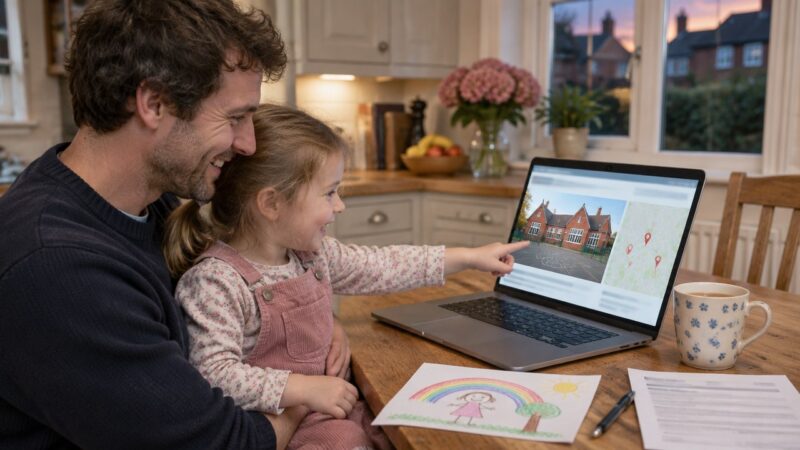
This is a job dads can just take on. Ring ahead, find out who’s coming to Nan’s and what time dinner is, and put it on the fridge. It sounds small. It saves a lot of questions on the day.
Agree when you’re leaving before you arrive
Nina Shah’s advice is to decide how long you’ll stay before you go, and if you’re hosting, let guests know when you’ll be wrapping up. It’s also fine to say no to another invitation if the diary is already full.
Agreeing a leaving time in advance takes the pressure off everyone. You’re not stuck in a hallway negotiating with a child who has hit their limit, and the relatives know what to expect.
Turn the volume down
Sensory overload is a big one at Christmas. The National Autistic Society and Action for Children both suggest:
- switching lights to a steady setting rather than flashing, or turning some off
- keeping at least one room free of decorations as a calm space
- skipping scented candles and air fresheners
- going without crackers, or finding ones with no bang
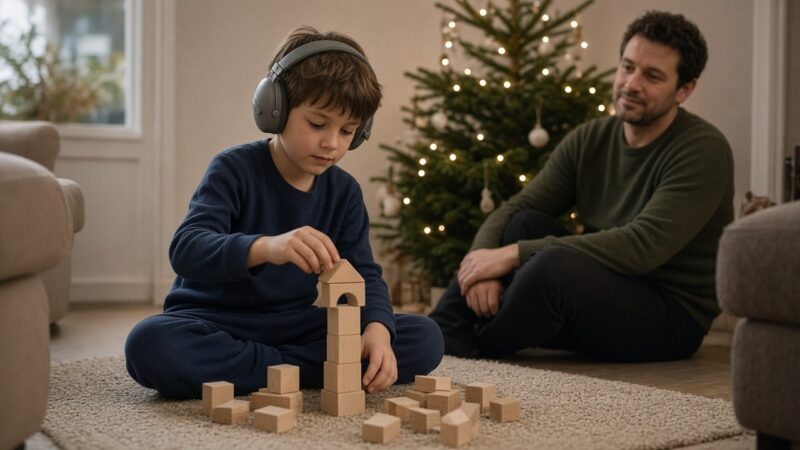
- offering ear defenders or headphones
- letting children wear clothes they’re comfortable in, Christmas jumper or not
Let them eat their usual dinner
If your child would rather have their normal tea on Christmas Day, both Nina Shah and the National Autistic Society say that’s fine. Keeping meal times the same as usual can help as well.
Speaking as someone who spent years cooking Christmas dinners for a living, nobody’s day is ruined because one plate has fish fingers on it. Honestly. It’s the most stress free plate on the table.
Rethink presents
Surprises are part of the fun for some kids and a real worry for others. Action for Children suggests telling your child what type of gift they’ll get (a book, say, with the surprise being which book), spreading presents across the day or over several days, and giving some unwrapped. Letting them open gifts away from everyone else, so they don’t feel watched, can help too.
It’s worth warning grandparents that your child might not react to a present the way they’re hoping. A quiet “thanks” or no reaction at all doesn’t mean they don’t like it.
Hugs are optional
Your child doesn’t have to hug or kiss anyone. A wave or a hello is fine, and the National Autistic Society suggests exactly that. Dads can make this easier by having a word with family beforehand so nobody takes it personally or pushes. It’s the same with joining in: some kids will be happier playing in another room, and that’s OK.
Build in recovery time
After a big family day, leave some time completely free. That might be a quiet afternoon, or a couple of days with no plans at all. The National Autistic Society also suggests having a plan for what to do if your child starts to feel overwhelmed, and a small kit of things that help them calm down, like headphones or a favourite fidget toy, for days out.
Talk to school now
Most of the December disruption happens at school before the holidays even start. Action for Children recommends finding out what’s planned (shows, parties, Christmas lunch, jumper days) and speaking to the school before the event if your child might need extra support. Ask whether they can sit out the louder bits, wear their normal uniform, or have somewhere quiet to go. If your child has a SENCo or a support plan, they’re the person to email.
Ask your kids what they actually enjoy
One of Nina Shah’s points is worth thinking about. If there’s a tradition everyone keeps doing simply because you’ve always done it, ask your children what they’d really like to do together. The National Autistic Society says the same: involve your child in planning, because what works for one autistic person won’t suit another.
You might find the panto can go, and a walk on Boxing Day with nobody else about is the bit they’ll remember.
Where to get more help
- The National Autistic Society’s Christmas tips page has a full checklist for planning each day.
- Action for Children’s Parent Talk has practical advice for children who find Christmas overwhelming, including those with ADHD, sensory issues or anxiety.
- Contact, the charity for families with disabled children, runs a free helpline for parents and carers anywhere in the UK on 0808 808 3555. Your child doesn’t need a diagnosis to get advice.
- The NHS page on supporting an autistic child covers routines, meltdowns and school support.
Christmas doesn’t have to look like the adverts. If it’s calmer, smaller and a bit different from everyone else’s, and your child gets through it feeling OK, that counts as a good one.

Join Dadsnet
Weekly dad stuff that actually helps. No spam, just the good bits.