If someone in the family WhatsApp group has spent the week telling everyone to charge their phones and dig out the torch for Thursday, here’s the short version. There is no national blackout planned for today, 19 November. The warning doing the rounds is fake.
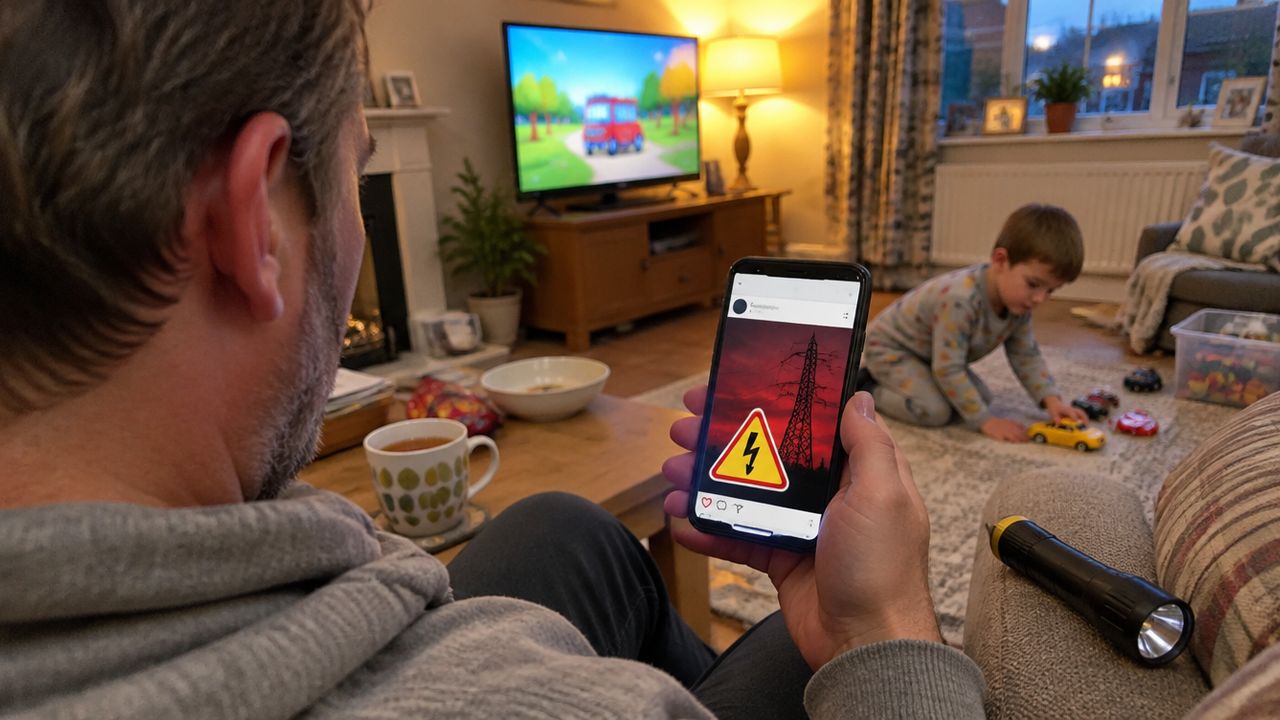
Over the past few days a poster made to look like an official National Grid alert has been shared across Facebook and Instagram. According to Full Fact, it claimed “a major blackout is expected to affect large parts of the UK on Thursday, 19 November 2026 from 4:00 PM, due to a critical fault in the national grid”, and told people to keep a torch handy, charge their devices and keep the fridge and freezer shut.
National Grid has knocked it on the head. A spokesperson told Full Fact: “There is no outage expected. Please disregard the post and report misinformation to social media platforms. Check our official channels for accurate information.” Netmums reported that the images were made with AI and racked up more than a million views, and Full Fact says the post was shared tens of thousands of times.
Why so many people believed it
Partly because it looked the part. Logo, official sounding language, a link at the bottom. Full Fact points out that the link actually led to an error page on National Grid’s website, which is a pretty big giveaway once you think to click it.
Timing helped too. Last month the government launched its Be Ready campaign, which asks households to be able to look after themselves for three days if an emergency cuts them off from normal services. So when a scary poster turns up a few weeks later talking about torches and charged phones, it feels like it fits. It doesn’t. The Be Ready advice is general and precautionary, and it isn’t a warning that anything is about to happen.
How to check a warning like this
National Grid’s advice is simple: check its official channels. For the local electricity network in the Midlands, the South West and South Wales, it pointed people to its customer account on X, @gridcustomersuk. Wherever you live in England, Scotland or Wales, calling 105 is free and puts you through to your local network operator, and the Power Cut 105 website lets you find yours by postcode so you can report or track a power cut.
It’s also worth knowing how a genuine national warning would reach you. The government’s Emergency Alerts system sends a loud alert straight to your phone in a life threatening emergency, and GOV.UK keeps a record of past alerts so you can check whether one is real. It says the service will never email you or ask for personal details.
Full Fact’s misinformation toolkit boils it down to three questions you can ask about anything that lands in your feed. Where’s it from? What’s missing? How does it make you feel? A post that makes you panic and want to share it straight away is exactly the one to slow down on.
If the kids have seen it
This sort of thing spreads in school group chats as fast as it does among adults, and younger children especially can take it to heart. A calm “that one’s fake, and here’s how we know” over tea does more than you’d think.
Childline’s page on worries about the world is written for kids and is worth a look together with older ones. It tells them that news and social media aren’t always accurate, that some posts are designed to scare people into reacting, and that it’s fine to stop, look for evidence and get a second opinion from an adult they trust. That’s a decent lesson to come out of a daft rumour.
Worth doing anyway (no panic required)
Real power cuts do still happen, especially when cables and equipment get damaged, though National Grid says most are short. So if this week’s nonsense has got you thinking, a few low effort steps are genuinely useful.
Sign up to the Priority Services Register if you’ve got little ones. This is the one plenty of dads won’t know about. The Priority Services Register is free, and households with children aged five or under at home can be eligible, along with people who have health conditions, rely on medical equipment or are of pensionable age. It lets your electricity network, and the energy and water companies it shares your details with, know you may need extra help when the supply is interrupted. It doesn’t guarantee your power stays on, but it’s a few minutes’ job. Worth doing for an older parent too.
Swap candles for a torch. The Be Ready checklist says torches are safer than candles, and National Grid doesn’t recommend candles or paraffin lights during a power cut. Keep a torch where you can find it in the dark, with spare batteries. Speaking as a paramedic, I’d rather nobody was stumbling round a dark house with a lit candle and a toddler in tow.
Never bring a barbecue or generator indoors. National Grid warns that these can give off carbon monoxide, which you can’t see or smell and which can kill.
Leave the freezer shut. National Grid says most power cuts are short and a freezer will keep its contents protected for up to 12 hours if you keep the door closed. It also suggests unplugging expensive kit like TVs and laptops, because surges during a power cut can damage them.
Think about the baby stuff. If you’ve got a baby on formula, the Be Ready checklist says ready to feed formula is best for emergencies, because you may not be able to boil water to make up powdered formula safely. Nappies and wipes are on the list too.
Write the numbers down. Be Ready suggests keeping important numbers on paper, including 105 for power cuts, and checking your child’s school or nursery has the right contact numbers for you.
Check on the neighbours. If the power does go, National Grid asks people to look in on neighbours who are elderly, very ill or disabled, and make sure they’re warm and have what they need.
The full Be Ready checklist also covers bottled water, tinned food, a wind up or battery FM radio, a charged power bank, cash and a first aid kit. The Be Ready page is clear you don’t need to do it all at once. It suggests checking what’s already in the cupboards and picking up the odd extra item on your normal shop to spread the cost.
So, for tonight. Lights on, tea on, telly on. And if Uncle Gary shares the poster again, you know what to send him.
Join Dadsnet
Weekly dad stuff that actually helps. No spam, just the good bits.