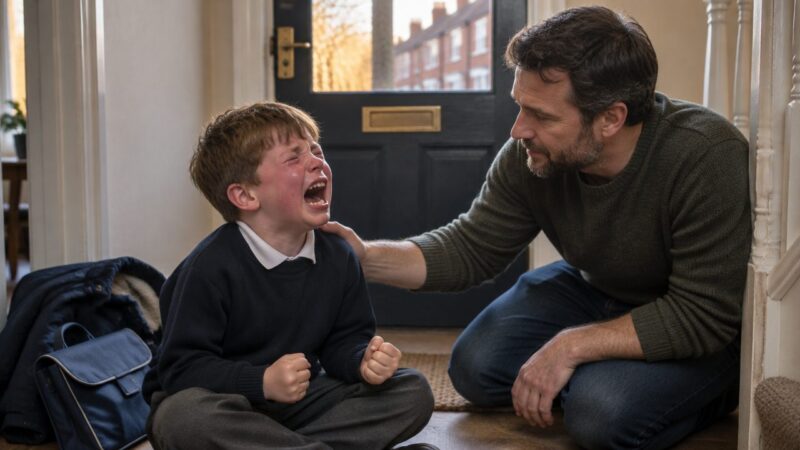
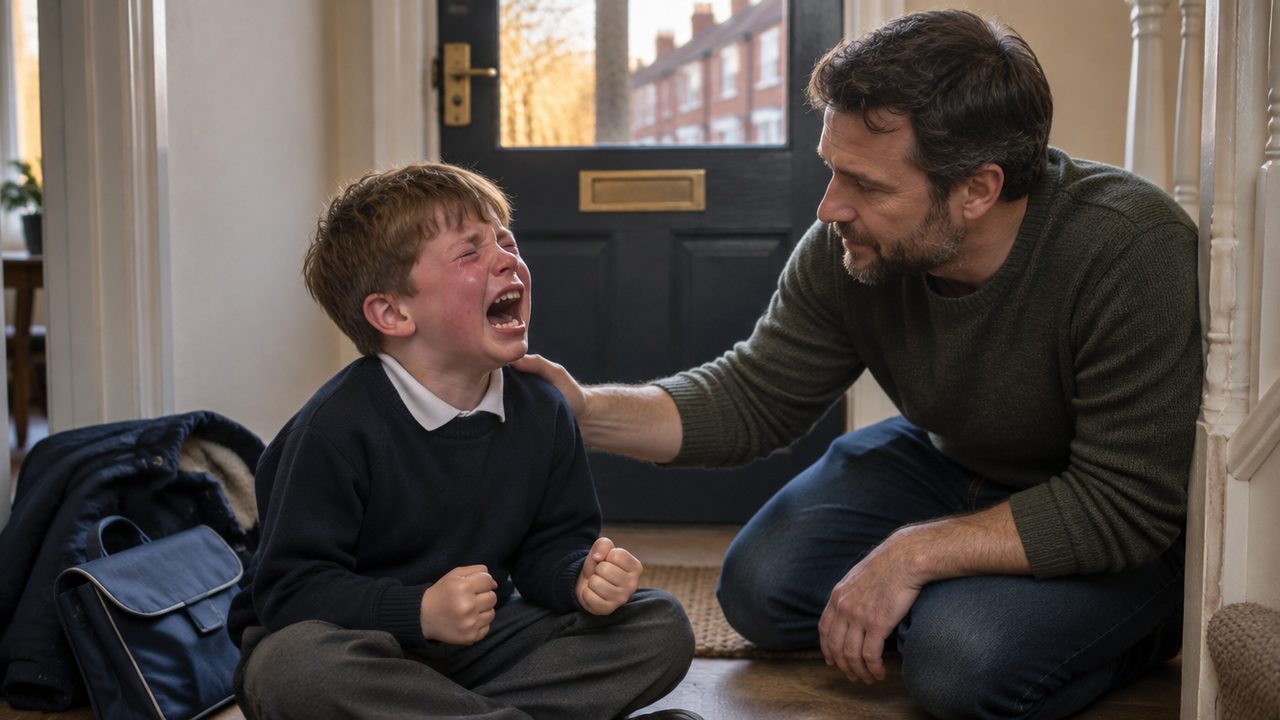
The teacher says they’re a joy to have in class. Polite, helpful, sits nicely on the carpet. Then they walk through your front door, you ask if they want beans or spaghetti hoops, and the whole thing goes off like a firework.
If that sounds like your house at about quarter to four, you’re in a very big club.
Netmums ran a piece this week with clinical psychologist Dr Jade Redfern, who said it’s one of the most common things parents bring to her. She called it “after school restraint collapse”. It’s worth knowing that’s a phrase used by parenting experts, not a medical diagnosis. But it does describe something a lot of families will recognise straight away.
Her main point is the one to hold on to: “What we’re seeing is a good child having a hard time, not a bad child doing bad things.”
Why it happens
Here’s the thing. School asks a lot of a child. Sit still, wait your turn, put your hand up, line up, don’t shout, keep your feelings to yourself. All day. Dr Redfern’s view is that holding all that in takes real effort, and when they get home the lid comes off.
There’s usually more than one thing going on. A noisy classroom and a busy playground can leave kids frazzled by home time. Hunger is a big one. Even the NHS, in its guide to toddler tantrums, says the cause can be as simple as a child being tired or hungry. Sometimes something went wrong at lunch, a falling out or a lesson that made them feel stupid, and they’ve carried it about all afternoon. Then their brother takes the last biscuit and they explode. It was never about the biscuit.
And then there’s you. Children tend to save their biggest feelings for the people they feel safest with. It doesn’t feel like a compliment when you’re being told “I hate you” over a snack, but it sort of is.
As someone who teaches in a secondary school, I’d add that this doesn’t stop at primary. The meltdowns look different at 13 (a slammed door, a grunt, an hour in their room) but a long day of holding it together can catch up with older kids too.
What dads can do
Feed them first, ask later. “How was school?” can wait. Have a snack ready, ideally in the car or at the door, and keep the first half hour or so free of questions and jobs. Dr Redfern suggests keeping demands to a minimum for roughly the first hour.
Turn the volume down. If they come home wired, a quiet sofa, lower lights and no telly blaring can help. If they come home bouncing off the walls, the opposite might work better. A run round the park or ten minutes on the trampoline. You’ll get to know which one your child needs, and it might change day to day.
Stay calm and stay close. Easier said than done at the end of your own working day, admittedly. The NHS points out that losing your temper or shouting back won’t end a tantrum. YoungMinds gives similar advice in its parents’ guide to anger: stay calm, use a calm voice, and don’t fire lots of questions while they’re still angry. You don’t have to fix it in the moment. Being nearby and not going anywhere is often enough.
Separate the feeling from the behaviour. YoungMinds suggests making it clear all feelings are OK, even when some behaviour isn’t. Something like, “It’s fine to be cross, but you can’t throw your bag at your sister.” You can be kind about the feeling and still hold the line.
Don’t give in to end it. The NHS is clear on this one. If you’ve said no, changing your mind just to stop the shouting teaches them that a meltdown works. Firm but warm is the aim.
Talk later, side by side. Once they’ve calmed down, that’s the time to find out what actually happened. Kids often open up more in the car, at bath time or at bedtime than in a face to face chat at the kitchen table. Dr Redfern’s suggested opener, “I wonder if something tricky happened today”, is a gentler start than “What’s wrong with you?”
Make home time predictable. A simple routine after school can help a lot. Snack, downtime, then homework or tea, in the same order most days. For younger children, Dr Redfern suggests a picture timetable. It sounds a bit much for a five year old, but it can take a surprising amount of arguing out of the afternoon.
Watch the diary. Clubs, playdates and swimming lessons are great, but a packed week can leave nothing in the tank. If the meltdowns cluster on the busiest days, that’s a clue.
Forgive yourself. You’ll snap sometimes. Everyone does. What matters more is coming back afterwards and putting it right. Saying sorry to your child shows them how to do the same.
When it might be something more
Most after school wobbles are a normal reaction to a long day. But it’s worth keeping an eye on the bigger picture.
The NHS says it’s normal for children to feel worried now and then, but signs of anxiety in children can include getting angry or irritable quickly, being out of control during outbursts, poor sleep, eating more or less than usual and tummy aches. If it’s not getting better, or it’s affecting school, family life or friendships, the NHS says a GP appointment is a good place to start. You can also talk to the school.
YoungMinds’ guide to school anxiety lists being angry or upset at home, not wanting to get ready in the morning, and feeling sick or having headaches among the signs a child may be finding school hard. It also lists big family changes, like parents separating, among the things that can make school harder to settle into. Worth bearing in mind if you share care and the meltdowns seem worse around changeover days.
For some children, the gap between school and home is especially wide. The National Autistic Society explains that some autistic children “mask”, which means working hard to appear non autistic so they fit in. It says this can be exhausting, and that meltdowns or shutdowns may only come out once a child feels safe enough, such as when they get home from school. You can read more in its guide to masking. If that rings a bell, GOV.UK says the first person to speak to about possible special educational needs is the school’s SENCO.
Where to get help
Coram Family Lives runs a free, confidential parenting helpline on 0808 800 2222, open Monday to Friday 9am to 9pm and weekends 10am to 3pm, closed on bank holidays. YoungMinds has a Parents Helpline on 0808 802 5544 on weekdays, but its hours vary, so check the website before you call. If you’re worried about your child’s mental health, your GP is the place to start.
And if today was a bad one, tomorrow’s another go. Snack ready, questions parked, and a bit more patience than you think you’ve got.

Join Dadsnet
Weekly dad stuff that actually helps. No spam, just the good bits.