Most of us only think about our hearts when something feels wrong. A new study suggests that by then, the clues may have been sitting there for decades.
Researchers led by the University of Edinburgh say early warning signs of a heart attack or stroke can be picked up as much as 30 years before it happens. The university announced the findings on Monday, and the work, funded by the British Heart Foundation, is published in the journal JAMA Network Open.
It’s been picked up by parenting sites this week under headlines about “warning signs”. Worth being clear from the start, though. These aren’t symptoms you’d notice. They’re numbers. And for a lot of dads in their thirties and forties, that’s actually the useful bit.
What the study found
The team pooled data on more than 100,000 people from four long running health studies in the UK, the US and Norway, covering 1985 to 2019. Nobody had had a heart attack or stroke when they joined. The researchers then compared people who went on to have one with people who didn’t, looking back over the years before.
The gaps opened up early. Systolic blood pressure, the top number in a reading, was consistently higher in people who later had a heart attack or stroke. The university says it was 4 mmHg higher three decades before, rising to 7 mmHg closer to the event. Cholesterol followed a similar pattern, according to the paper.
A few other things stood out:
- Younger events, earlier red flags. People who had a heart attack or stroke at a younger age were more likely to have had diabetes and a higher BMI in the decades before.
- Something in the blood. Levels of a protein called NT proBNP, which doctors use to monitor heart failure, started to differ up to 10 years beforehand.
- Everyday stuff mattered too. Physical activity and kidney function also tracked differently between the two groups.
- Men and women differ. Younger women had lower blood pressure than younger men, but that flipped at around 65.
The researchers didn’t look at differences by ethnicity, and they say more work is needed there.
Dr Dorien Kimenai, a BHF research fellow at the university’s Usher Institute, said the findings “show that modifiable risk factors begin to diverge 30 years before a cardiovascular event occurs.”
Why it matters for dads
Cardiovascular disease kills one in four people in the UK, according to the university. The NHS says men are more likely to get it than women, and that it mainly affects people over 50.
Here’s the catch. If the study is right and the numbers start drifting in your twenties and thirties, then the time to look is while you’re busy doing school runs, not once you’ve retired.
And high blood pressure is sneaky. The NHS high blood pressure page says it usually causes no symptoms, so the only way to know is to get it checked. The British Heart Foundation reckons as many as 5 million adults in the UK have high blood pressure and don’t know it.
Professor Bryan Williams, the BHF’s chief scientific and medical officer, put it plainly: “For the vast majority of people, heart attacks and strokes are completely preventable. But many of us don’t realise we are at risk until it’s too late.”
Now then. I’ve been to plenty of jobs where the first anyone knew about a heart problem was the 999 call. Nobody wants that to be how they find out.
Know your numbers: what you can actually do
Professor Williams said the best thing for now is “knowing your numbers”, getting your blood pressure and cholesterol checked. Here’s how, without much faff.
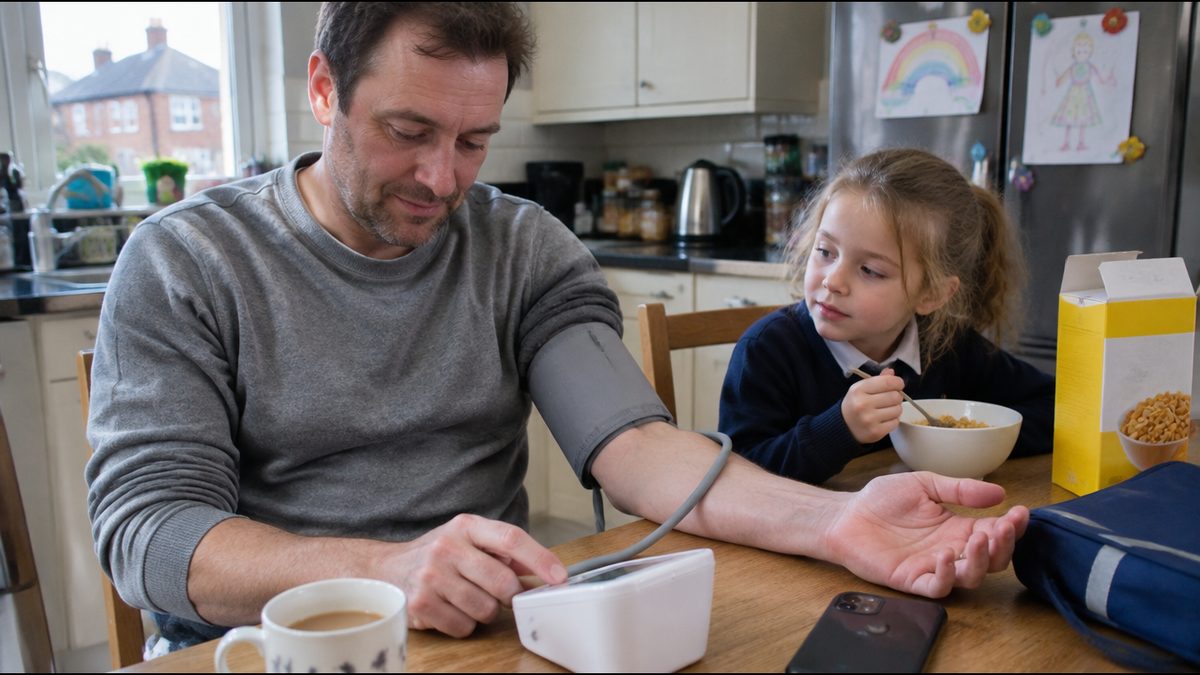
Get your blood pressure checked. You don’t need a GP appointment. In England, many pharmacies offer a free check if you’re 40 or over, don’t already have a high blood pressure diagnosis and haven’t been checked in the last five years. It takes a couple of minutes with a cuff on your arm. Your GP surgery can do it too, and some workplaces offer checks.
Know what the reading means. The NHS says you’re usually considered to have high blood pressure if it’s 140/90 or higher when a professional checks it, or 135/85 or higher at home. If it’s high, you may be asked to monitor it at home for a few days to get a proper picture, so one dodgy reading after a stressful morning isn’t the end of the story.
Book your NHS Health Check. If you’re 40 to 74 and living in England without an existing heart, circulation, kidney or diabetes condition, you should be invited for a free NHS Health Check every five years. It takes 20 to 30 minutes and covers blood pressure, cholesterol and sometimes blood sugar, and you get a risk score for the next 10 years. Not had a letter? The NHS says contact your GP practice, or your local council if your practice doesn’t offer them.
Younger than 40? Try the heart age tool. The NHS heart age calculator works for people aged 30 to 95 anywhere in the UK. It asks for your blood pressure and cholesterol if you know them, but those bits are optional.
Not in England? The free pharmacy check and the Health Check invites are England schemes. In Wales, Scotland and Northern Ireland, ask your GP practice or a local pharmacy about getting your blood pressure measured. NHS inform in Scotland has its own guide.
Tell them about the family. The NHS lists close relatives with high blood pressure or heart disease as a risk factor, along with a Black African, Black Caribbean or South Asian background. If your dad or grandad had heart trouble young, mention it.
One thing you can’t easily get is that NT proBNP blood test the study looked at. It isn’t part of the standard NHS Health Check, and the researchers say more work is needed on whether newer markers like it should be used to estimate risk. So don’t go demanding it. The basics will do for now.
The boring stuff that makes a difference
None of this is new, but the NHS advice for lowering blood pressure is worth a reminder:
- Aim for at least 150 minutes of exercise a week. A brisk walk to school and back counts towards it.
- Go easy on the salt, including the hidden stuff in ready meals and takeaways.
- Keep alcohol under 14 units a week on a regular basis.
- Don’t smoke. If you do, NHS Better Health has free tools to help you stop.
- Watch the caffeine. The NHS lists coffee, tea and cola.
And know the emergency signs
While we’re on hearts, a quick refresher, because it’s the sort of thing you hope never to use.
The NHS says call 999 if someone has chest pain that feels tight or like squeezing, especially if it spreads to the arms, neck or jaw, or comes with sweating, sickness or breathlessness. Don’t drive yourself to A&E.
For a stroke, remember FAST: face drooping, arm weakness, speech problems, time to call 999. The NHS says get help even if the symptoms stop.
The headline from Edinburgh might sound a bit grim. But the flip side is a long window to do something about it. Ten minutes in a pharmacy is a tidy trade for that, butt.
Join Dadsnet
Weekly dad stuff that actually helps. No spam, just the good bits.