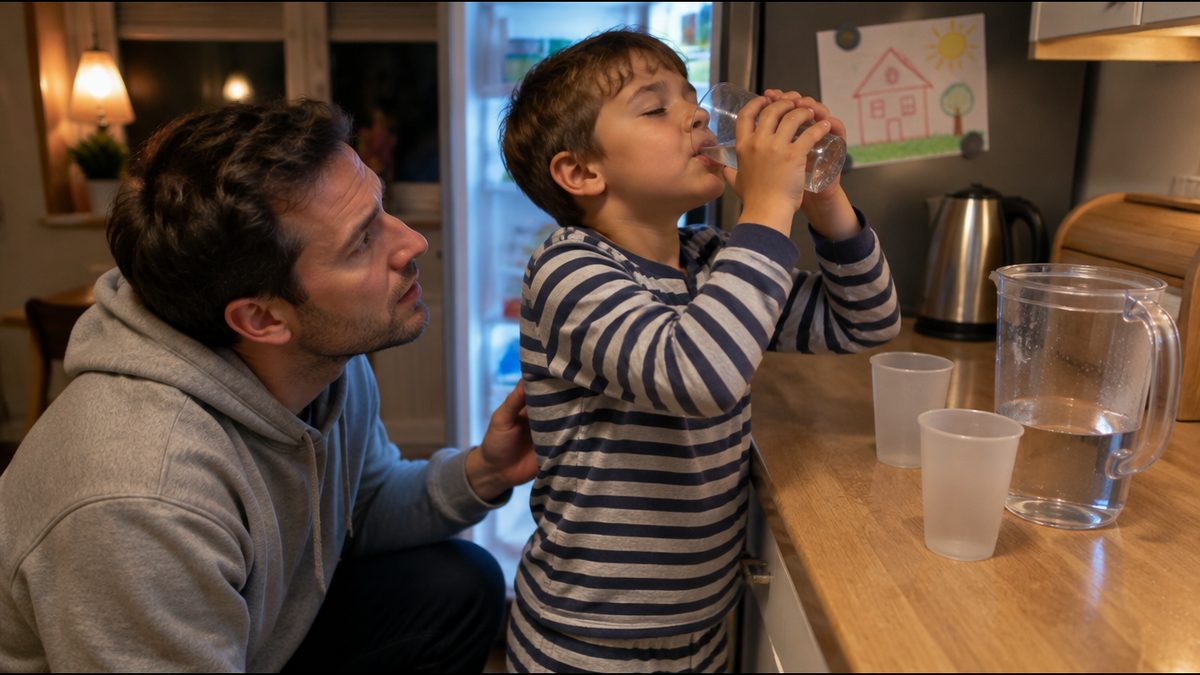
Kids drink a lot of squash. They go through phases of wetting the bed. They get tired, especially at the end of a long winter term. Most of the time none of that means anything.
But put a few of those things together, appearing over a week or two, and doctors want parents to think of one thing straight away: type 1 diabetes.
Diabetes UK has been reminding parents about what it calls the 4Ts, and Netmums ran a helpful piece on them this week, written by Ade Ilori after speaking to the charity. It’s a simple checklist worth keeping in the back of your head. Here’s what it means and what to do if something rings a bell.
What type 1 diabetes actually is
Type 1 diabetes is where the body can’t make insulin, the hormone that keeps blood sugar in check. Diabetes UK says the exact causes aren’t known and there’s nothing anyone can do to prevent it. It isn’t something you caused as a parent.
The NHS says it usually starts in children and young adults, although it can happen at any age. The risk is a bit higher if someone in the family has type 1 or another autoimmune condition, but Diabetes UK points out that most people with type 1 have no family history of it at all. So “nobody in our family has it” isn’t a reason to rule it out.
It’s also different from type 2 diabetes, which the NHS says usually develops more slowly and is more common in older people.
The 4Ts
These are the four most common symptoms. The NHS and Diabetes UK both use the same easy way to remember them.
- Toilet. Weeing much more than usual, especially at night. In little ones that can mean heavier nappies. In a child who’s been dry for a while, it can mean wetting the bed again, or more accidents in the day.
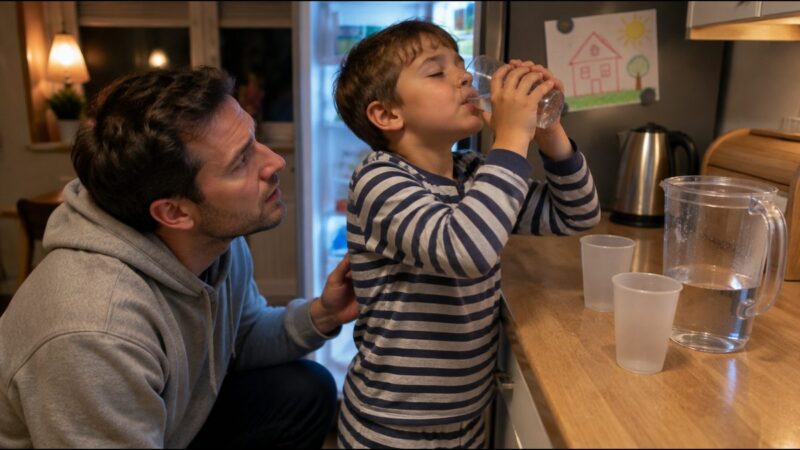
- Thirsty. Not normal thirsty. Drinking loads, finishing drinks really quickly, getting up in the night for water, and still not seeming satisfied. Diabetes UK mentions children helping themselves from the tap and babies wanting to feed more.
- Tired. Much less energy than usual. Napping more or for longer, struggling to stay awake at school, not wanting to play, irritable, or not able to concentrate.
- Thinner. Losing weight without trying, sometimes even while eating more. Often noticed when you’re getting them dressed and their clothes seem looser.
Diabetes UK says a teacher might be the first to spot something, for example a child asking to go to the toilet a lot in lessons or nodding off in class. If school mentions anything like that, take it seriously.
The NHS lists a few other signs too: blurred vision, breath that smells sweet or fruity (it describes it as like nail polish remover or pear drop sweets), cuts that take longer to heal, and infections that keep coming back, such as thrush or nappy rash.
Right. If you like things on one page, this is the one to stick on the fridge. Toilet, thirsty, tired, thinner. That’s the whole prep list.
Why speed matters
The key thing about type 1 in children is how quickly it comes on. The NHS says symptoms develop over a few days or weeks. That’s very different from the slow creep people often picture when they hear the word diabetes.
If it isn’t treated, it can lead to diabetic ketoacidosis, or DKA. The NHS page on DKA explains that a lack of insulin causes harmful substances called ketones to build up in the blood. It can be life threatening and needs urgent hospital treatment. The NHS says it can happen when someone first develops type 1 and hasn’t been diagnosed yet, particularly children, and that DKA symptoms usually develop over 24 hours, sometimes faster.
The tricky bit is that early type 1 can look like a lot of normal childhood stuff. Diabetes UK says the symptoms can be mistaken for flu, tonsillitis or a urine infection. The NHS adds that children may also have a cold, tonsillitis, tummy pain or nappy rash at the same time, which can make it harder to diagnose. So if your gut is telling you something’s off, say so.
What to do if you spot the signs
This is the practical bit, and it’s worth reading twice.
Don’t wait for all four. One or two of the 4Ts, especially together and especially if they’ve come on quickly, is enough to get checked.
Get seen the same day. The NHS says to ask for an urgent GP appointment or get help from NHS 111 if you think your child has type 1 diabetes. Diabetes UK says symptoms should be assessed on the same day by a GP, or a local hospital if it’s out of hours.
Say the word diabetes. Diabetes UK advises telling the doctor that you suspect diabetes and asking for a blood test to check. It’s a quick finger prick test for blood sugar, and the charity says it only takes a few seconds. The NHS says it can help to bring a sample of your child’s wee to the appointment, as they may test that too.
Expect things to move fast. If the tests suggest type 1, the NHS says your child will need to see a specialist in hospital to start treatment, usually on the same day. That can be a shock, so if you can, have someone ready to sort out the other kids.
When it’s a 999 job
The NHS says call 999 or go to A&E if your child has been weeing more, very thirsty and tired, and also:
- their symptoms are getting worse quickly
- they have tummy pain, diarrhoea, or are feeling or being sick
- they’re sleepy or confused
- they’re breathing faster and more deeply than usual
These can be signs of DKA. If you’re going to A&E, the NHS says don’t drive yourself if you can avoid it. Ask someone to drive or call 999 for an ambulance.
A word on bedwetting
Plenty of dads reading this will have a child who wets the bed, and the vast majority of the time it has nothing to do with diabetes. The NHS bedwetting page says many children under five wet the bed and most grow out of it.
The one to notice is a change. The NHS says to see a GP if your child has started wetting the bed again after being dry for more than six months, and lists diabetes and constipation among possible underlying causes. If that new bedwetting comes with extra thirst, tiredness or weight loss, treat it as urgent rather than routine. And either way, the NHS is clear: don’t punish your child for it. It isn’t their fault.
What’s changing
There’s some genuinely hopeful news in this area too. Diabetes UK says it’s funding the ELSA study, which is screening children aged 2 to 17 for early signs of type 1 in the blood before symptoms appear. The charity also says the first treatment designed to slow type 1 down in its early stages, teplizumab, was approved for use on the NHS in 2026. None of this replaces knowing the 4Ts, though.
Where to get help
If you’re worried, or your child has just been diagnosed, Diabetes UK’s helpline is on 0345 123 2399, Monday to Friday, 9am to 6pm. It’s for families and friends too, not just people with diabetes.
I’m still learning plenty about kids’ health, and I don’t expect any dad to be a doctor. But four words are easy enough to remember. Toilet, thirsty, tired, thinner. If you see them, get it checked today, not next week.
Join Dadsnet
Weekly dad stuff that actually helps. No spam, just the good bits.