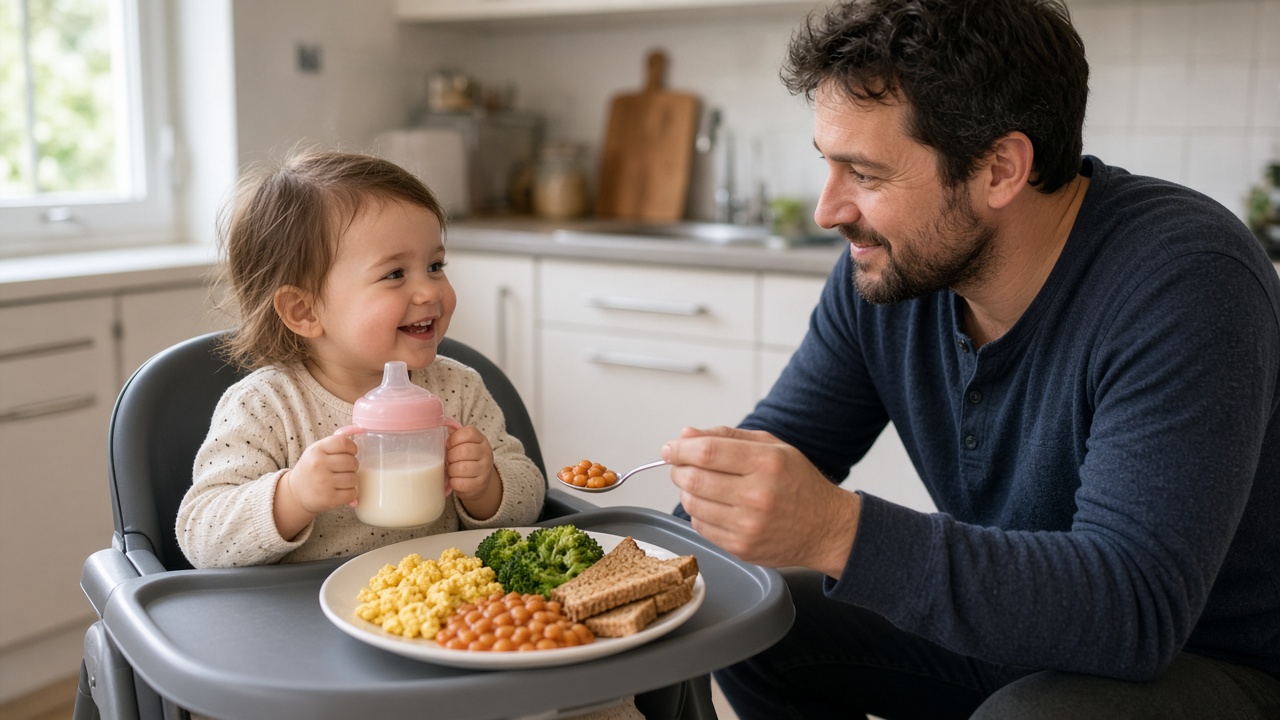
Rosie has a beaker of milk before bed. Has done since she was about one. After reading the news over the weekend I went and measured it, which is a very dad thing to do at nine o’clock on a Sunday night. Put it that way.
Netmums ran a piece on Sunday pulling together what doctors are saying about toddlers who drink too much cow’s milk. The short version is this. Milk is good for kids, but it’s filling and it has very little iron in it, so a toddler who mostly lives on milk can end up too full for the food that actually has the iron. Over time that can lead to iron deficiency anaemia.
Nobody is saying milk is bad. That bit matters, so I’ll say it again at the end.
Why it’s in the news
The warning goes back to Australia. In August a blood specialist at Queensland Children’s Hospital, Dr Sally Campbell, told ABC News that too much cow’s milk had contributed to the deaths of three toddlers there in the past two years. She said the children had been drinking more than a litre a day, and that it was an infection on top of severe anaemia that their bodies couldn’t cope with.
HuffPost UK then asked UK doctors about it, and Netmums picked that up. The doctors are clear that cases like those are rare, and that cow’s milk itself isn’t dangerous. But being low in iron is one of the most common nutrient problems in young children, according to nutrition researchers writing in The Conversation, and it’s an easy thing to check at home. So it’s worth ten minutes.
Why milk gets in the way
Cow’s milk gives kids protein, calcium and vitamin A. What it doesn’t give them is much iron. And it fills them up. A toddler who’s had a big beaker mid morning and another one after nursery is going to push their tea round the plate, and the iron is mostly in the tea. Meat, fish, eggs, beans, lentils, green veg, fortified cereals.
The GP quoted in the piece, Dr Asiya Maula, put it plainly. The worry is when milk keeps replacing meals and iron rich food, not the milk on its own. The NHS page on iron deficiency anaemia also lists milk and dairy among the things that, in big amounts, make it harder for the body to absorb iron.
So how much is about right?
This is where it gets a bit muddled, because the numbers aren’t all the same. Here’s who says what.
- The NHS says to aim for at least 350ml of milk a day from age one, or two servings of things made from milk, like cheese, yoghurt or fromage frais. That’s a minimum to hit, not a target to beat.
- The dietitians at Aneurin Bevan University Health Board in Wales go a step further in their iron leaflet for parents: no more than 400ml a day from 12 months, and only about 300 to 350ml a day from two to four.
- Dr Maula’s line is that if a toddler is routinely having well over 500ml a day, especially instead of meals, it’s worth a chat with your health visitor, GP or a dietitian.
- In Australia the guidance is up to 500ml a day for one to five year olds.
For scale, a pint of milk is 568ml. So a toddler who gets through most of a pint a day between the beakers, the cereal and the bedtime one is already past that 500ml mark. Easier than you’d think. Ask me how I know.
A few more NHS basics while we’re here. Babies under 12 months should have breast milk or first infant formula as their main drink, with cow’s milk only used in cooking from about six months. From one, whole or semi skimmed milk is fine as a main drink, but skimmed and 1% aren’t suitable as a main drink until five. Toddler milks and growing up milks aren’t needed after 12 months either. And the NHS says bottles should be discouraged once a baby turns one, with an open cup or a free flow cup instead.
That bottle bit is worth taking seriously. A Canadian hospital review published in August looked at 128 children with very severe iron deficiency anaemia. Most of them, 84%, were drinking more than 500ml of cow’s milk a day, and 91% of those aged one or over were still using a bottle. It’s one hospital and the most serious cases, but it shows how easily milk adds up through a teat.
The signs to look out for
The doctors HuffPost spoke to said the early signs can be subtle. A child who is unusually pale, tired, irritable or flat. A poorer appetite. Less interest in the things they normally love. As it gets worse, breathlessness, a fast heartbeat, trouble concentrating, poor growth, or cravings for things that aren’t food. The NHS calls that last one pica, and mentions things like paper or ice. Paediatrician Dr Arindam Das also said any new swelling around the eyes, feet or tummy that you can’t explain should be checked by a doctor.
To be fair, half of that list describes any three year old at five o’clock on a nursery day. Which is the point. You’re looking for a pattern over weeks, not one grumpy afternoon. And you can’t spot iron deficiency just by looking. It takes a blood test, which your GP can arrange.
The advice in the piece is to get urgent help if a child is unusually drowsy, very breathless, collapses, has blue or grey lips or seems properly unwell. In an emergency that’s 999. If you’re not sure, NHS 111 can help, and you can call to speak to someone about a child under five.
What to actually do
The main message from the doctors was don’t panic and don’t suddenly stop milk. Cut it back gradually if it’s a lot.
- Measure it for a few days. Every beaker, the cereal, the bedtime one, whatever nursery or grandparents give. Ask nursery what they offer, because you might be doubling up.
- Give milk at set times, like with a meal or at bedtime, rather than having it on tap all day. Water is the best drink in between.
- Food first. If the beaker comes out just before tea, tea loses every time.
- If they’re still on a bottle after one, start moving them to a cup. Not overnight, mind. Just start.
- Put iron on the plate most days. Meat or fish if you eat it, or eggs, beans, lentils, chickpeas, fortified cereal and green veg. The Welsh leaflet says having fruit or veg with vitamin C at the same meal helps the body take in iron from plant foods.
- Don’t buy iron supplements on a hunch. The doctors said not to give them without medical advice, because too much iron can be harmful. The NHS goes further and says an iron overdose can be fatal for a young child, so keep any iron tablets in the house well out of reach.
- Have a word with your health visitor or GP if they’re regularly well over 500ml, if you’ve noticed any of the signs, or if fussy eating means they’re living on a very short list of foods.
What other parents say
On the forums this usually turns up as “my toddler won’t eat meals” rather than anything about milk. In one Mumsnet thread a mum said her nearly two year old was barely touching lunch or tea but drinking plenty of water and cow’s milk. The first replies said it sounded like a normal fussy phase. Then people picked up on the milk. One asked her to define plenty. Another said to think of milk as food, not a drink, because too much and there’s no room for tea. One poster said her health visitor had told her a small cup with breakfast or on cereal was enough by 18 months, though that’s one family’s advice, not an official rule.
That pretty much sums it up. The milk is easy to miss because it feels like the healthy bit.
Loose end
For the record, Rosie’s bedtime beaker was fine. It was the one I’d been handing her in the car after nursery that tipped the total. That one’s water now. She was not impressed.
Milk is still good, to be fair. It’s just meant to go alongside tea, not be tea. Measure it once, move the beaker to mealtimes, put some beans on the plate, and if anything on that list of signs rings a bell, ring your health visitor.
Anyway. Brew.
Sources: Netmums: Parents warned too much milk can cause iron deficiency in toddlers, HuffPost UK: Cow’s milk and low iron in toddlers, ABC News: Cow’s milk contributed to three toddler deaths, NHS: What to feed young children, NHS: Drinks and cups for babies and young children, NHS: Iron deficiency anaemia, Aneurin Bevan University Health Board: Iron advice for children and young people, Paediatrics and Child Health: When too much milk becomes dangerous, The Conversation: Worried your toddler isn’t getting enough iron?, NHS: When to call 999, Mumsnet Talk: Toddler not eating meals.
Join the Dadsnet crew
Get weekly dad stuff in your inbox, with useful ideas, honest stories and a bit of dad chat from dads who get it.
Join the Dadsnet crew
Weekly dad stuff that actually helps. No spam, just the good bits.