The loudest fireworks sold to the public could be kept for professional displays only in future, under plans the government put out for consultation this summer. Not in time for this Bonfire Night, though. So if you’ve got a baby or a toddler at home, the bangs around Thursday 5 November will be as loud as ever, and a bit of planning goes a long way.
What’s changing, and what isn’t
In July the Office for Product Safety and Standards opened a consultation on fireworks across the whole of the UK. The main proposal is to cut the maximum noise level for fireworks sold to the public from 120 decibels to 110, which it says would make them roughly half as loud to the ear, with the noisiest products kept for professional displays. It also asked whether the limit should go lower still, to 100 or even 90 decibels, and whether more products should go on the banned list.
Launching it, consumer protection minister Kate Dearden said: “Fireworks used properly are great fun, and we want the professional displays which bring communities together to continue.”
The consultation on GOV.UK closed on 7 October. Now the responses get analysed, the government publishes what it plans to do, and any change needs Parliament’s approval first. So the fireworks in the shops this autumn are the same as last year’s. If you feel strongly about it, and plenty of parents of light sleepers do, it’s worth keeping an eye out for the government’s response and telling your MP.
The rules as they stand
According to GOV.UK, registered sellers can sell fireworks, sparklers included, for Bonfire Night between 15 October and 10 November. Outside the set dates in the year, only licensed shops can sell them. You have to be 18 to buy adult fireworks. Nobody can set them off between 11pm and 7am, except on Bonfire Night, when the cut off is midnight. And it’s against the law to set off or throw fireworks, again including sparklers, in the street or other public places. So no sparklers on the pavement outside the house.
Scotland has its own extra rules, including no fireworks before 6pm or after 11pm apart from on certain nights, and in Northern Ireland you need a licence for most fireworks. Check locally if that’s you.
Should you take a baby or toddler to a display?
There’s no official advice saying you shouldn’t. It mostly comes down to your child, how late it is, and where you stand.
With 5 November on a Thursday this year, a lot of displays may well run on the weekend before or after instead. Check the date and start time with your council or local club, and think about how late it’ll finish compared with bedtime.
Little ones tend to find the noise far more of a shock than we do, and a baby can’t tell you it’s too much. Distance is the easiest fix. The back of the crowd is quieter, out of the crush, and much easier to leave. Look which way the bonfire smoke is blowing and stand on the other side. Layers matter (it’s a long wait in a cold field), but don’t park yourselves right next to the fire to keep warm, because sparks travel. A carrier on your front keeps a baby close and leaves your hands free.
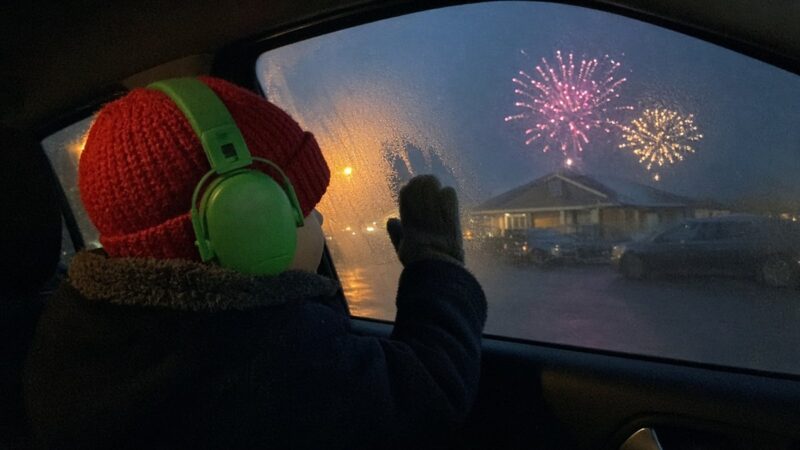
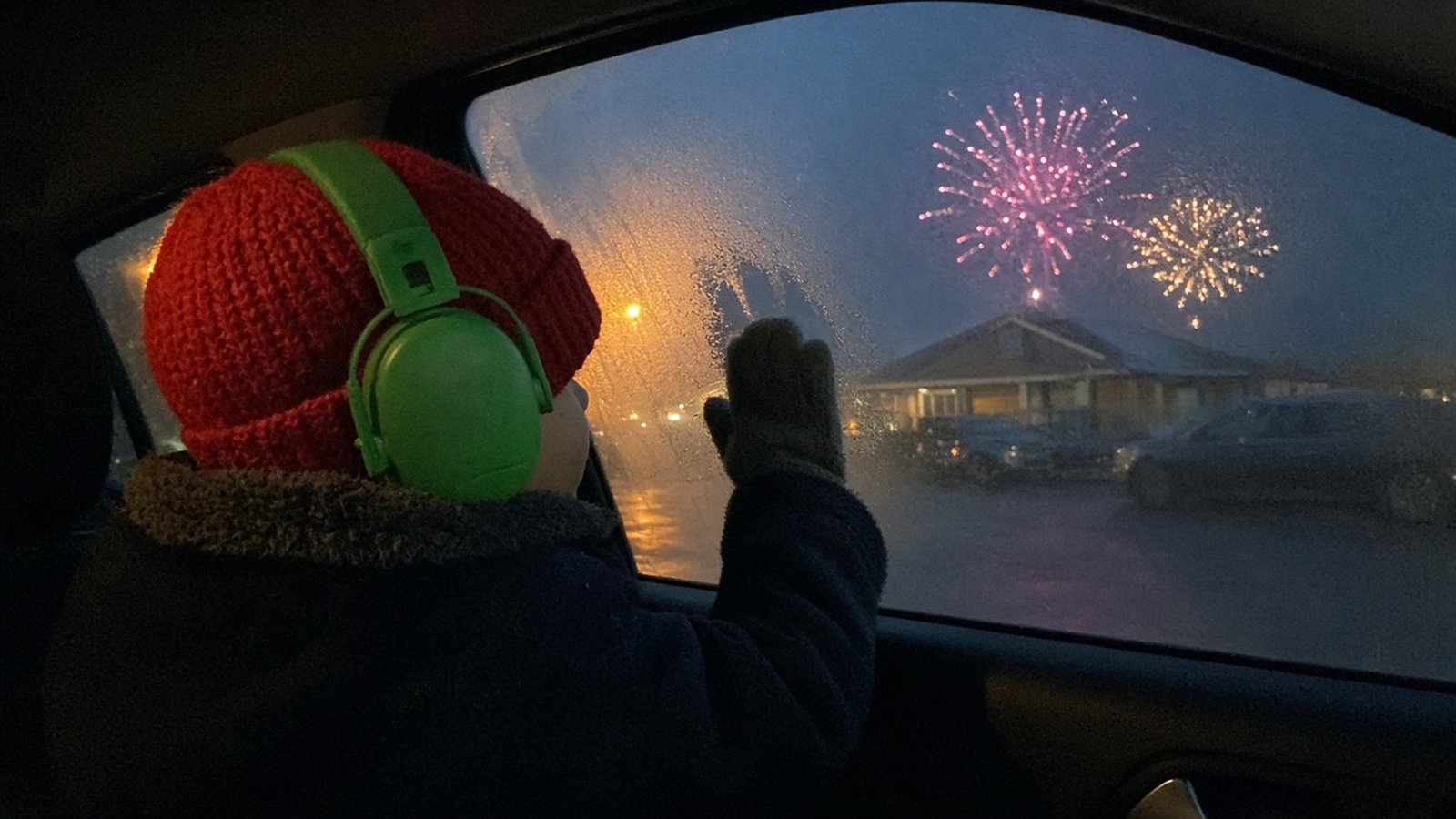
Have a way out, and actually use it if they’re upset. An upstairs window, a friend’s garden up a hill, or the car with the heater on all count. A toddler who hates the bangs in an open field might be perfectly happy behind glass, where it’s mostly colour and a dull thud.
Ear defenders, not earplugs
If you’re going, kids’ over ear defenders are worth the money. Get a pair made for your child’s age (baby ones are smaller and softer), and check they sit snugly over the ears rather than perched on top. Earplugs aren’t suitable for babies and toddlers. They’re small, hard to fit properly in a little ear, and a choking risk.
Try the ear defenders on at home a couple of times so they’re not a strange new thing in the dark. But don’t make them an everyday habit. NHS leaflets on children’s sound sensitivity say ear defenders are best kept for short spells of loud noise, like a fireworks display, because children need to hear ordinary everyday sounds to get used to noise normally.
Organised display or the back garden?
RoSPA says the safest place to enjoy fireworks is a professionally organised public display, where far fewer people get hurt than at family or private parties. Somebody else does the lighting, and there’s a proper safety distance between the fireworks and the crowd.
If you’re doing your own, stick to the Firework Code. The main points:
- Only adults handle fireworks, from setting up to lighting to clearing away
- Keep them in a closed box and use them one at a time
- Light them at arm’s length with a taper, then stand well back
- Never go back to a firework once it’s been lit
- Point rockets well away from anyone watching
- Keep children supervised and watching from a safe distance
Read the box as well. Garden fireworks (category F2) need a safety distance of 8 to 15 metres, and display fireworks (F3) need at least 25 metres, which rules out a lot of gardens. Keep a bucket of water handy. When you’re done, let used fireworks cool completely, soak them in water and bag them up for the general waste bin, and check the garden for any that didn’t go off before the kids are out there again.
Sparklers: not for under fives
Now then. Speaking as a paramedic, this is the bit I’d underline. Sparklers look gentle. They burn very hot, and they stay hot for a while after they’ve gone out.
RoSPA’s sparkler advice:
- Don’t give sparklers to under fives
- Wear gloves
- Hold them at arm’s length and light one at a time
- Never hold a baby while you’re using one
- Put used ones straight into a bucket of cold water
A four year old can still watch you write their name in the air. That’s usually what they want anyway.
If someone gets burned
The NHS burns and scalds advice is worth knowing before the night, not looking up during it:
- Hold the burn under cool running water for 20 minutes, as soon as you can. If there’s no tap, cool bottled water or a wet towel will do
- Take off any clothing or jewellery near the burn, but leave anything that’s stuck to it
- Once it’s cooled, lay cling film over it. Don’t wrap it round
- Don’t put butter, creams or oils on it
Call 999 or go to A&E if the burn is very large or deep, or if it’s on the face, genitals or bottom. If you’re not sure what to do, get help from 111, and for a child under five the NHS says to call 111 rather than use the online service. Twenty minutes under the tap feels like forever with a crying child. Keep going anyway.
And the dog
If you’ve got pets, the RSPCA suggests walking dogs in daylight, keeping cats in after dark with the cat flap shut, closing the curtains, putting music or the telly on, and bringing rabbits and guinea pigs indoors. Make sure microchip details are up to date in case anyone bolts. And don’t take the dog to the display, even if it seems fine with bangs.
That’s it, really. Plan for the noise, keep the sparklers away from the little ones, and know your burns first aid. If the night ends with everyone in the car with the heater on, watching the sky through a steamed up window, there’s lovely. It still counts.
Join the Dadsnet crew
Get weekly dad stuff in your inbox, with useful ideas, honest stories and a bit of dad chat from dads who get it.
Join the Dadsnet crew
Weekly dad stuff that actually helps. No spam, just the good bits.